Plenty of people visit “Orlando” without ever setting foot in the city of Orlando. The Disney parks sit in the separate cities of Bay Lake and Lake Buena Vista. The real city has an old 1927 courthouse downtown, and inside it is the story of how all of this started. I went to find out.
I got to the Orange County Regional History Center at 10 am on a Saturday and counted about ten other people in the whole building. Having a museum almost to myself felt strange, especially compared to the constant crowds and lines you run into at the theme parks.
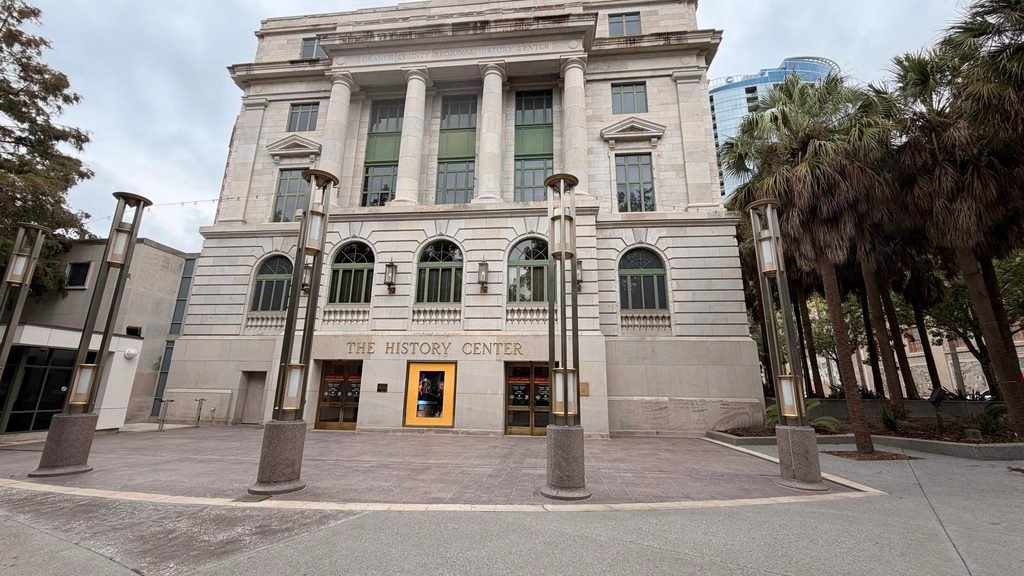
The Orange County Regional History Center is an imposing neoclassical revival building right in the middle of downtown, and it covers the story from the region’s first people, to the colonization of the land, to the citrus and cattle days, to the turning point when Walt Disney decided to make that land the home for his parks. Beyond that, it covers in depth the African American history of the region.
If you are a history buff, want to learn more about this city’s upbringing, want some protection from the Florida heat (or rain), or simply want to focus on something more than theme parks, then a visit to the Orange County Regional History Center is definitely worth it.
History Center Quick Facts
- Address: 65 E Central Blvd, Orlando, FL 32801 (corner of Central Blvd and Magnolia Ave, downtown)
- Hours: Monday to Saturday, 10 a.m. to 5 p.m.; Sunday, 12 to 5 p.m.
- Admission: $10 adults; $8 seniors (55+); $6 ages 5 to 12; $7 students and military; free for ages 4 and under, members, Orange County employees, and Florida educators. Check the museum’s site for current pricing.
- Parking: Street parking downtown runs about $4 for two hours, and meters have a two to three hour limit. Paid admission includes two hours of validated parking in the Library Garage (112 E Central Blvd), one validation per party.
- Time needed: About 2 hours; more if you read everything in depth
- Accessibility: Elevators, restrooms and water fountains on every floor, benches by the stairs, a push button to open the heavy doors, wheelchairs to borrow, audio in some fourth-floor interactive displays, and free sensory backpacks at the front desk (details under Essential Things to Know)
- Renovations: Updates are underway, so call (407) 836-8500 before visiting for a specific exhibition. The Murry S. King Gallery is used for events only (it was closed during my visit).
Start Outside: Heritage Square, Where Orlando’s City Limits Were Drawn
The Heritage Square park is many times dismissed as just another resting, shaded area, or a passageway between N Court Ave and N Magnolia Ave. More than that, it is where the old courthouses used to be. Most of Orange County’s courthouses stood on this block. A log cabin courthouse came first, and the city limits were platted from this spot in 1857 (originally one and a half miles square). A red-brick Victorian courthouse with a clock tower followed in 1892, and the 1927 building was added beside it and became the main courthouse.
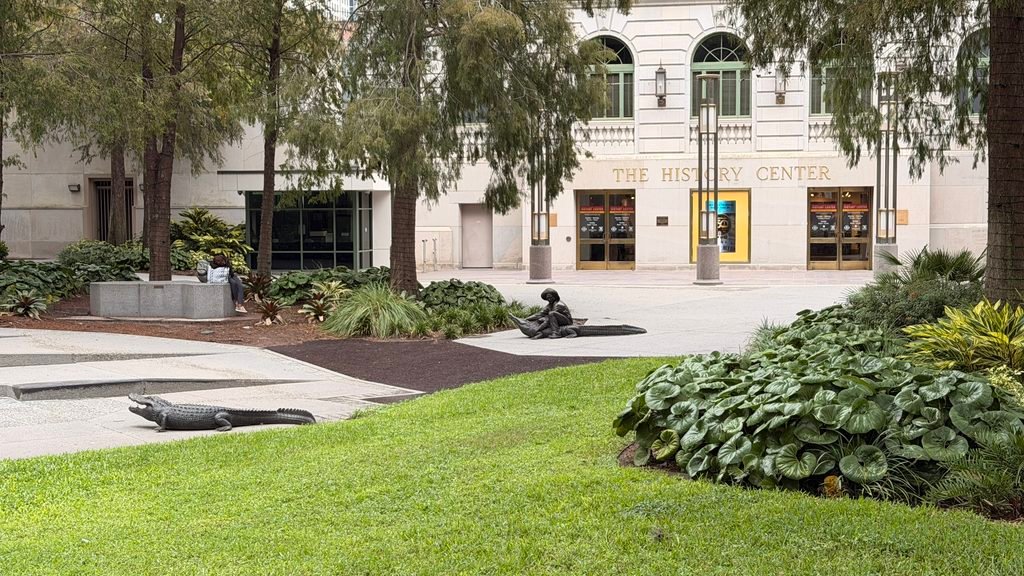
Don’t be like everybody else. Take your time to appreciate the square, feel the history, take a picture climbing on the alligator statues (the one wrestling an alligator copies an 1884 photo of a local meat market manager on nearby Orange Ave), sit down and people watch those coming and going, and have a coffee under the trees before (or after) your visit to the Orange County Regional History Center.
The square also holds a historical marker honoring July Perry and the other victims of the 1920 Ocoee Election Day massacre, unveiled in 2019 (more on that story in the second-floor section). I didn’t see it. I did not walk all the way around the square, and there were a couple of bigger structures in front of it. I didn’t see a plaque about the 1857 survey point either, so if you have the time, look for both.
The square and the museum felt safe to me. It’s right in the middle of downtown, so expect to see people living on the street. I did, and it didn’t worry me. Growing up in Brazil, it takes more than that to frighten me.
The Building Is the Best Exhibit
Today, only the 1927 building stands, and it is where the museum is held. Per the museum, this building was the last work of Florida’s first registered architect, Murry S. King (license issued 1915). He died in 1925 and his son finished the job. It is also locally known as the “Million Dollar Courthouse” for its high cost at the time.
Downtown was still quiet that Saturday morning and I found street parking half a block away. It was great to have the place almost to myself, to explore and to take my time. Get there early to avoid the crowds, especially on weekends and in season.
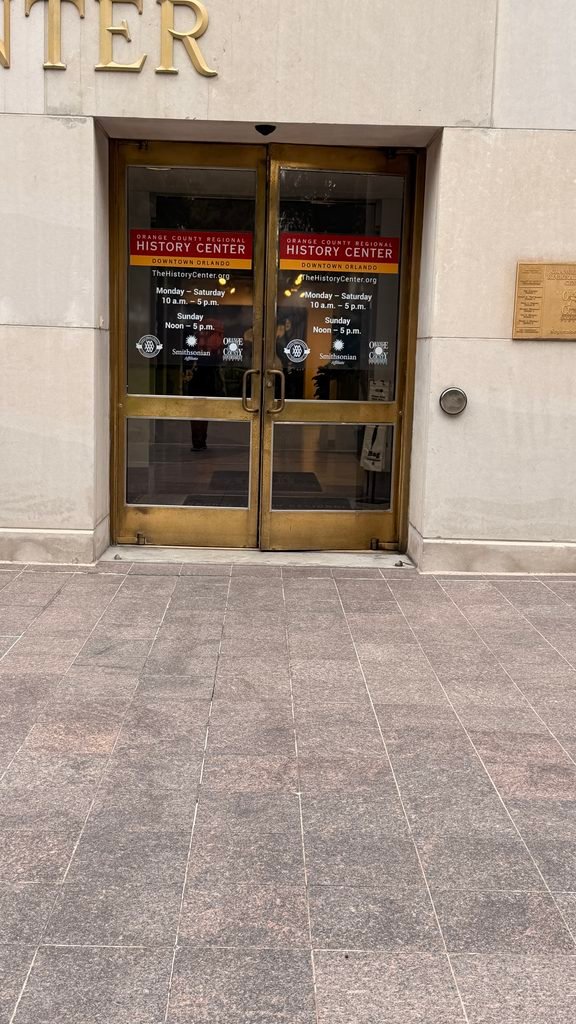
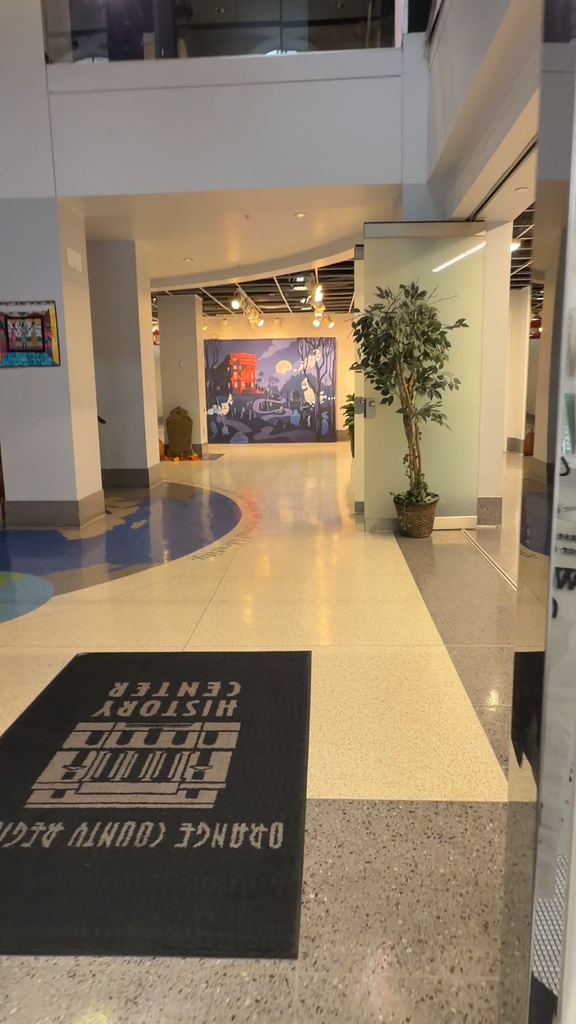
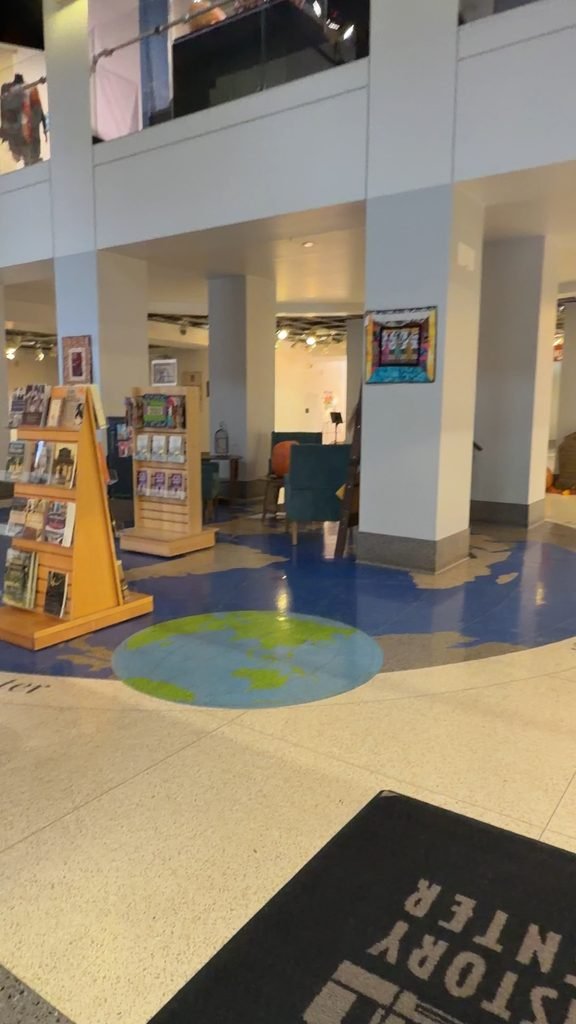
From the moment I arrived at the museum I knew I was going to like it. The heavy golden doors felt (even if for a second) like I was going into a place of history. They also reminded me of the doors of an old hotel. The lobby was large, with a small gift shop right in the middle. The reception workers were very friendly and were happy to answer any questions I had. There was also a treasure hunt you could join by trying to find specific memorabilia throughout the exhibitions. I had a lot of fun looking for all of them, so you should probably give it a try!
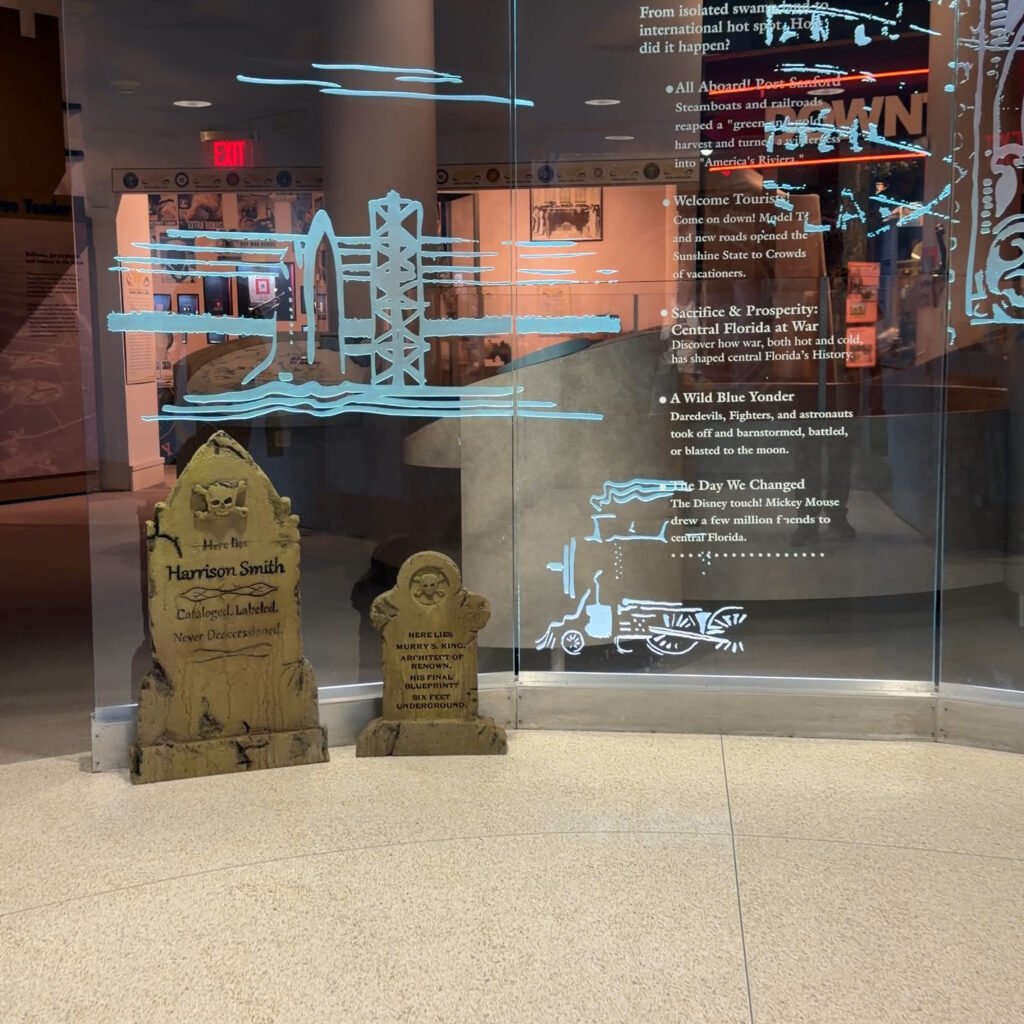
I visited in October, so the museum was also decorated for Halloween, with random skeletons here and there and cemetery stones all over the museum, always with a fun quote or the name of someone important. My favorite said: “Here Lies Murry S. King, Architect of renown, his final fulfillment, six feet underground.” I loved finding these throughout the museum.
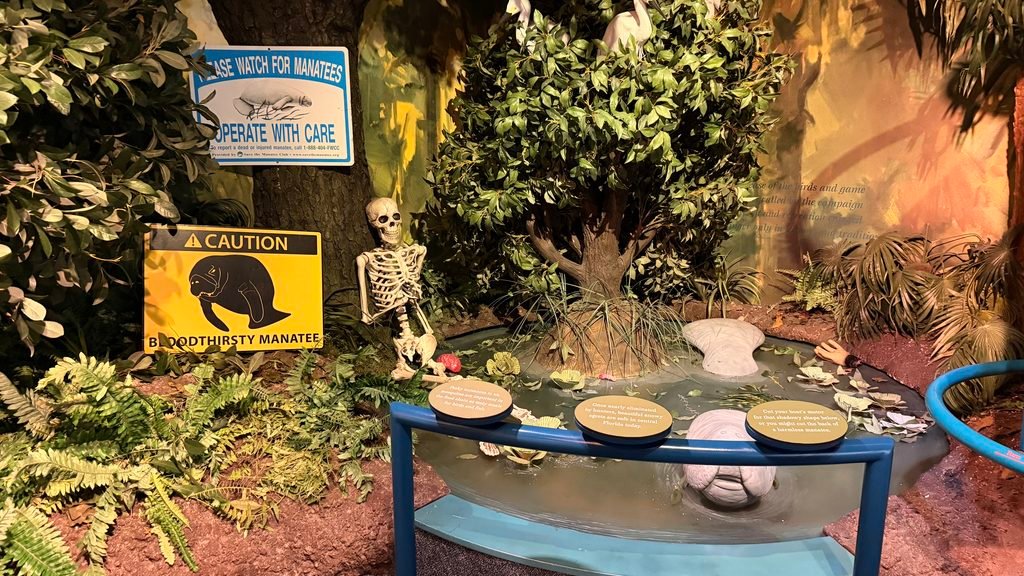
The building was bright, clean, spacious, but cold. I mean, I am always cold, but it felt like the AC was going stronger than usual. Even those that don’t get cold easily seemed to be feeling the cold just as I was. So make sure to bring a light jacket if you are visiting during hotter days. It is even a warning on the museum website!
The building also once had a jail on its top floor, built with separate cellblocks for white women, white men, Black women and Black men. Nothing of it is left. The fifth floor is now a research library, and the exhibits start on the fourth.
The Ted Bundy Table: What’s True
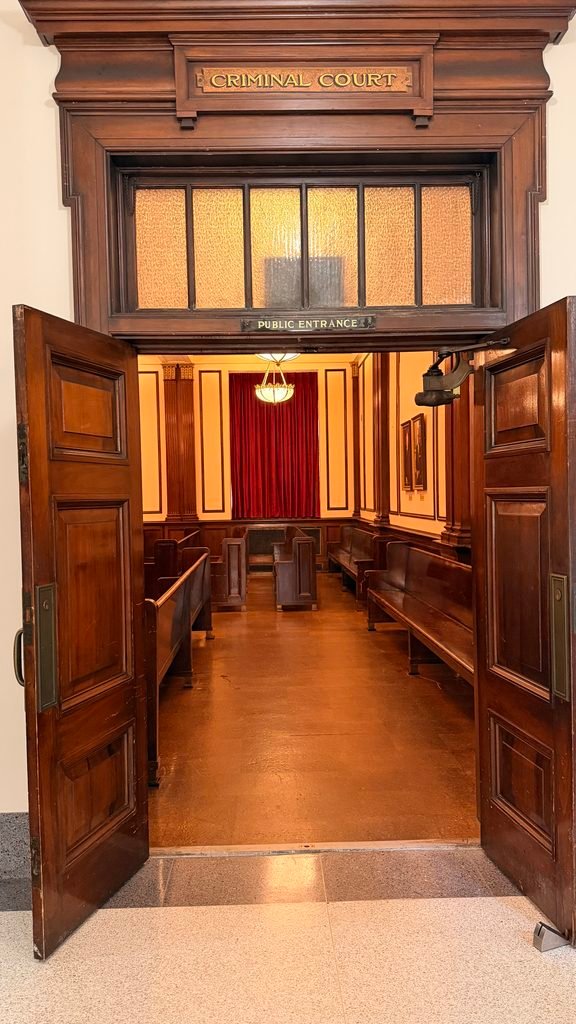
On the third floor you will find a preserved and original Historic Courtroom. The first thing you see are the doors, wide open, allowing you passage to the room. Right above the doors it reads Criminal Court in bold yellow letters, and right below it “Public Entrance”. The heavy wooden doors, the worn wooden benches, the red curtains on the wall where the windows should be, all these elements made me feel like I was about to witness a trial, just like in the movies. I’ve never been to a courtroom before, so my only means of comparison are the ones I see on TV, and with that in mind, I found the room rather small. I believe the size was right for the time, when Orlando and Orange County were still small and did not require big rooms.

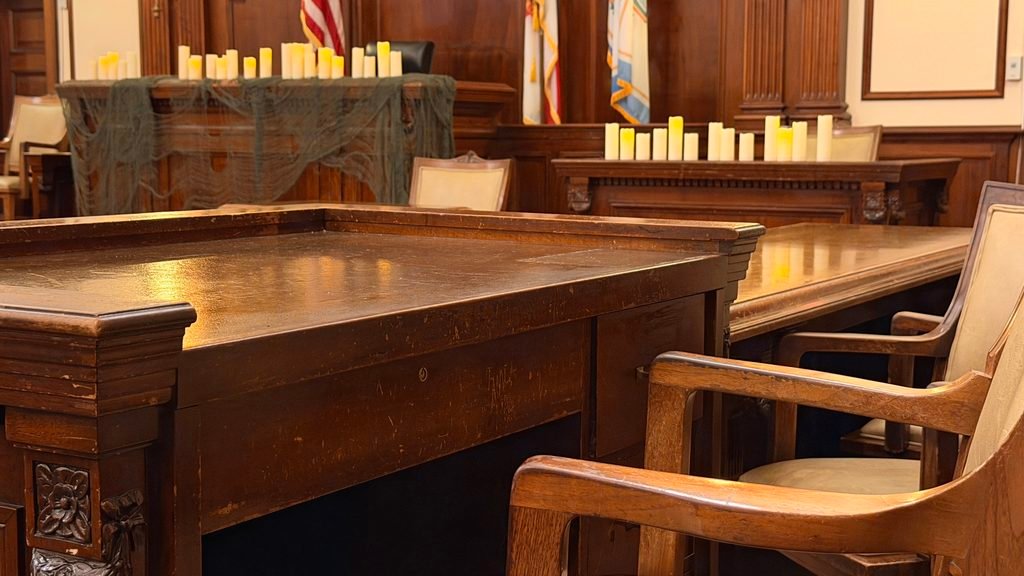
It contains mostly original furniture that was present when the court was still active. There aren’t many details or decorations (not that I was expecting much of that), but it seemed bare. Probably because it was not being used. I imagine that when it was active the people and the history being made was all the details needed to fill the room. Nowadays this room can, again, make history, when it is rented for ceremonies such as weddings. In fact, you can rent the entire building for a special occasion.
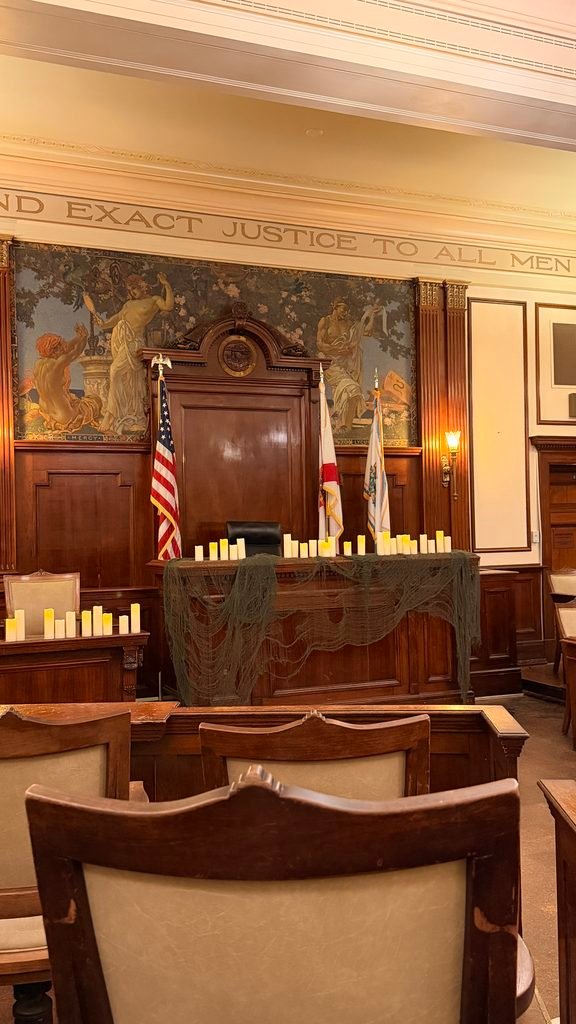
You may have heard that Ted Bundy was tried here, but that is not the case. He was, according to the museum, tried for the murder of Kimberly Leach in the courthouse’s annex building (which is no longer standing), in a trial that began Jan 7, 1980 in Orlando. The museum also states that Ted Bundy’s name is carved in one of the tables in the room, but unfortunately I was not able to locate it. And I tried!

More interesting, in my opinion, is that the first DNA case conviction in the country happened in this courthouse. This trial changed history! Per the museum, in 1987 Tommie Lee Andrews became the first American convicted using DNA evidence, and only 10 years later all 50 states had laws requiring DNA samples from convicted sex offenders!
What’s On Now: By Heart and By Hand
Once you move to the second floor, to one side you will find the Murry S. King Gallery (Florida’s first registered architect, remember?), which at my time of visiting was closed, unfortunately (the museum told me it is used for events only). On the left side of the stairs, however, you will find the ongoing exhibition on the Central Florida history of African Americans and, right next to it, a special exhibition. During my visit it was “By Heart and By Hand,” a showcase of works by Black craft artists across Central Florida. It runs through March 28, 2027.
From quilting and embroidery to sculptures and wall art, each piece tells a story. I found art from artists such as Lisa G. Moore, an Orlando-based heritage quilter; Winston D. Andrews, a Trinidad and Tobago-born sculptor and wood artist based in Orlando; and Na’ah Gordon, an Orlando-based multidisciplinary artist.
I was taken by the fun, colorful quilted clothing pieces on display, such as a yellow, orange and red dress made by an artist whose name I couldn’t see. My favorite pieces, though, were the quilt-like wall pieces of everyday scenes that you could interact with by placing magnetic figurines on the art, making it unique and yours, such as adding a hot dog over the full moon or placing a bird right over kids playing, hoping it might have a doo-doo right there (hehehe, evil laugh).


The exhibition of these Black craft artists, as a continuation or an arm of the African American history in the area, was, as I see it, perfect. As I said, the fixed exhibition is heavily shaped with pictures to be observed and writings to be read. But the art pieces made by those honoring their heritage and history bring to life the strength, the hope, the resilience, the pride. Even though their past was covered in darkness and difficulties, the art presented was bright, colorful, full of life and texture. To me, that is what these artists show: the past does shape us, but we get to choose how. We can use it as an excuse to stay in the darkness, or as the strength and motivation to rise above.
Inside the Orange County Regional History Center: The Floors Worth Your Time
Per recommendation of the staff at the front desk I started the tour on the 4th floor and worked my way down. You may use the stairs or the elevator to get there. If you use the elevator, start with the exhibit to the right, while if you are climbing the stairs, the exhibit will start to your left. I wish I had been informed of the order of things, for I started at the wrong end. I wish they had also warned me of this when I was paying for my tickets, or that there was some sort of sign telling me where to start. It didn’t necessarily affect my visit, but it would have made more sense.
Fourth Floor: Discovering a Paradise
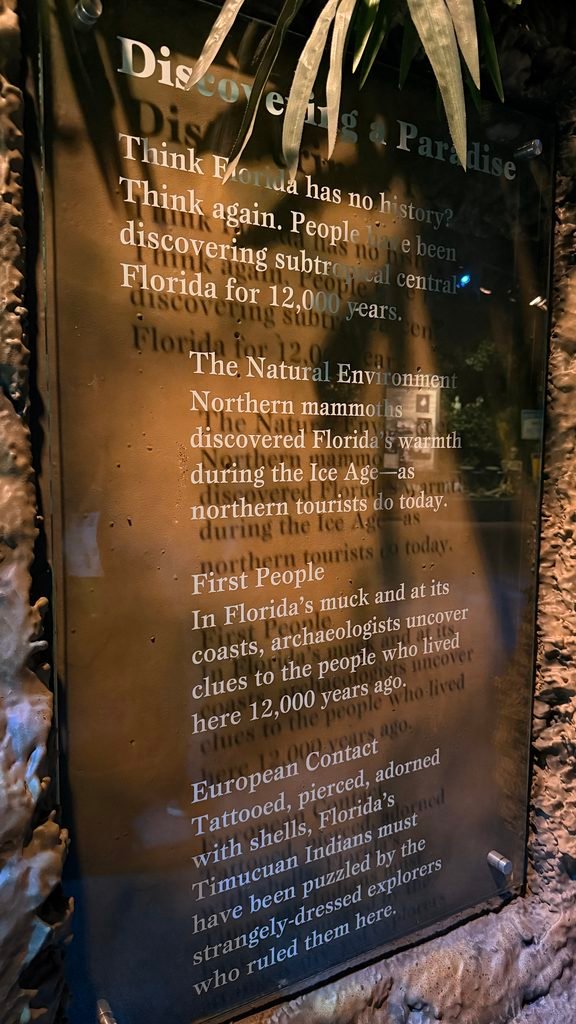
The fourth floor of the museum, “Discovering a Paradise,” goes over the history of the region, starting with the first inhabitants of the area, such as the Timucua and then the Seminole, and how they used to live, in addition to the animals that were present on the land. It moves to how the Seminole and other indigenous people first adapted their customs once Florida received the new settlers. However, around the 1800s the Seminoles got to a point where they had enough of the influence of the new people and refused to move from their land, which came with a lot of resistance and resulted in 40 years of conflicts and wars.

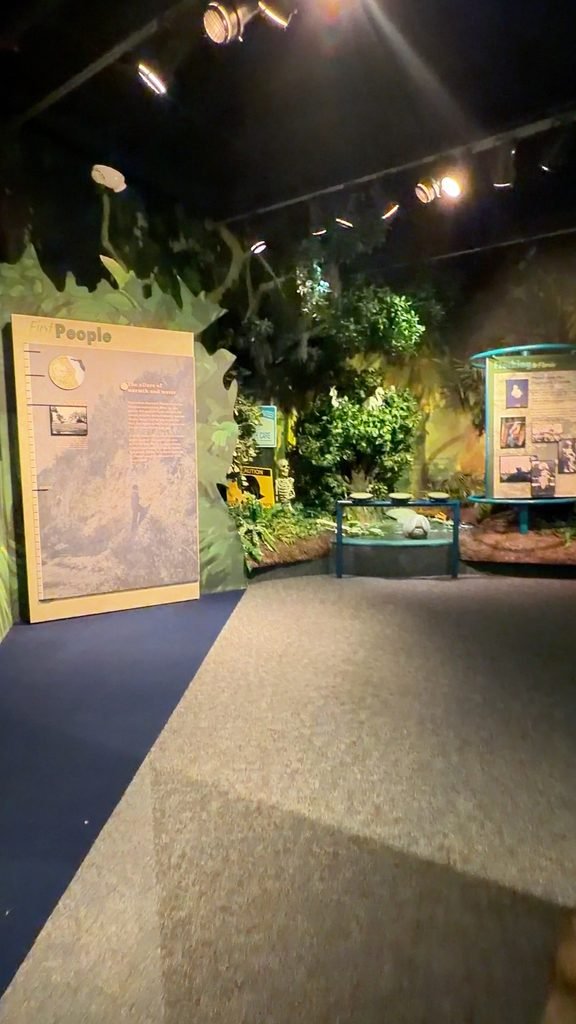
“The white men are as thick as leaves in the hammock; they come upon us thicker every year. They may shoot us, drive our women and children night and day; they may chain our hands and feet, but the red man’s heart will always be free”
Coacoochee (Wild Cat), 1841, during the Second Seminole War

Next comes the history about how the region turned into the Land of the milk and beef during the late 1800s, and the evolution of the industry that is, until today, crucial to the Central Florida economy (Orlando’s Milk District is a good reminder). It is important to mention that here is where we first hear of one of the names that shaped what the city became, Jacob Summerlin, the Cattle King of Florida.
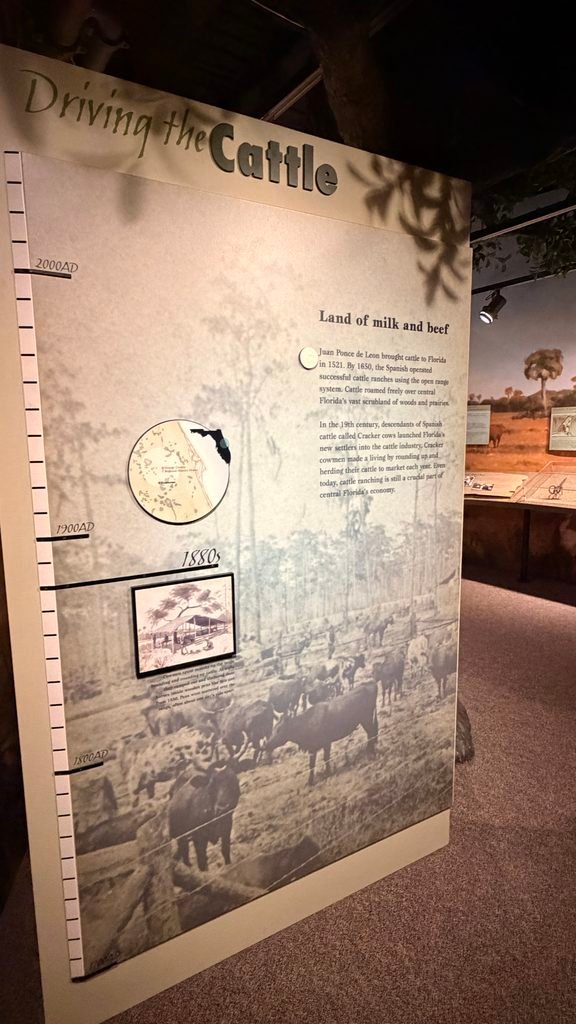
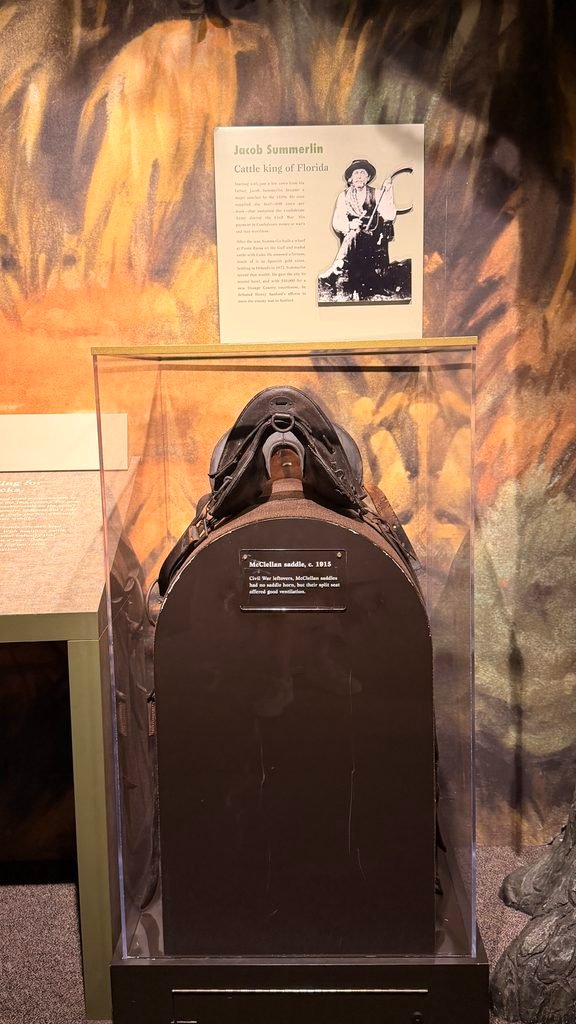
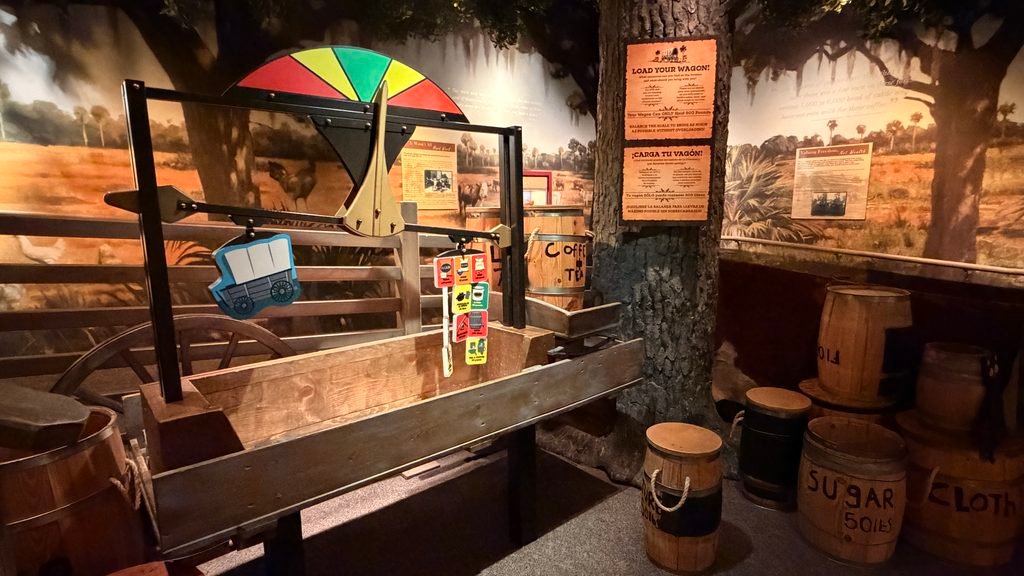
This section also talks about the challenges of becoming a settler at that time. If moving nowadays is a hassle even with all the technology and conveniences we have at our disposal, can you imagine moving to a whole new area back then?
The new settlers moved to the area not because they were looking for wealth, but because they valued their freedom. But that freedom meant they needed to leave their life behind and bring with them only the essentials so they could start a new life from scratch. One of the interactions at the museum is exactly that: building your own survival kit for a new life. What would you choose? Or better yet, do you think you would be up to the move at all?
Moving up in time, the exhibition shows how the settlers made a home of the land, and covers their customs, their ways of living, and even their courting. You will see artifacts of the time, such as shovels and card decks. In the replica settlers’ home, a “dead” couple was lying on the bed, part of the Halloween decorations. But that time was not only about freedom and development. It was also one of the most lawless and bloody times in Orange County.
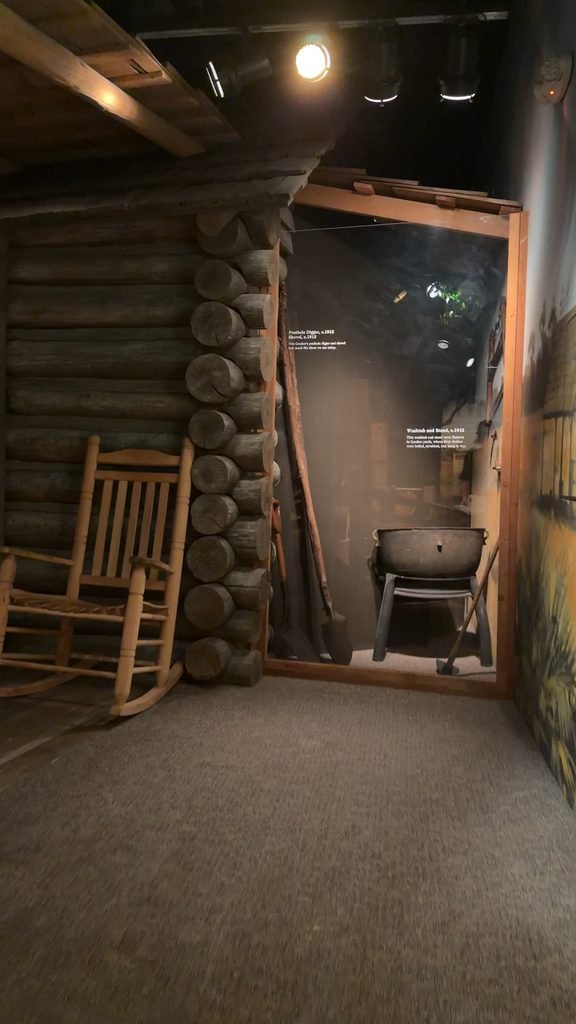

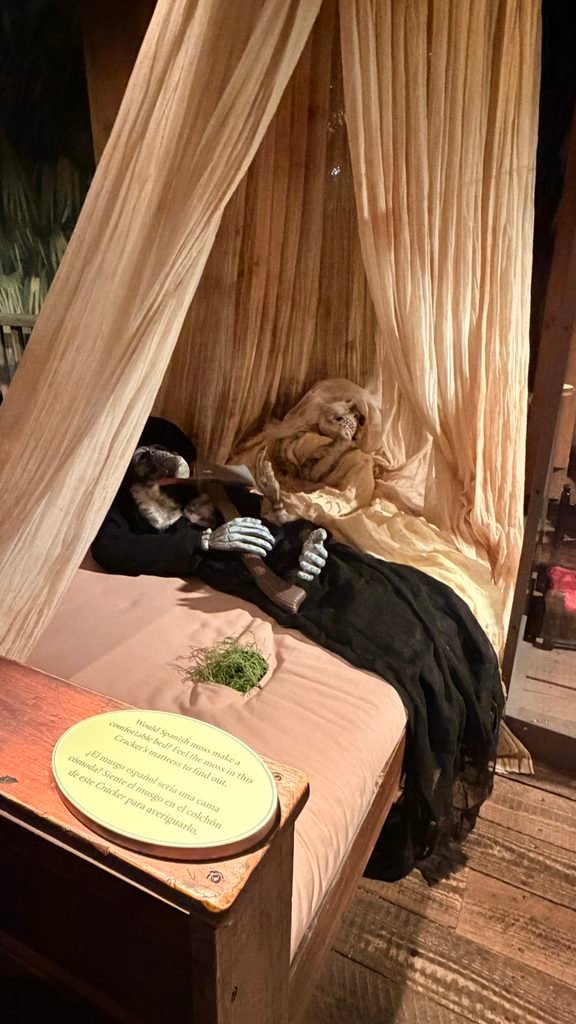
Lastly we move to the citrus industry, which the exhibit dates to the 1890s. The Spanish were the ones that started the citrus cultivation in Central Florida, and it is still a vital part of the state economy.
Between 1920 and 1954, Dr. Philip P. Phillips (who named this guy???) was the largest citrus grower in the whole wide world. If you are somewhat familiar with Orlando you must be familiar with that name. There is even a whole neighborhood named after this man in this city. I lived in Orlando for two years and drove through that neighborhood all the time, and I never once asked who Dr. Phillips was. He was also known for improving the pasteurization process of canned orange juice to make it taste good. He was an early contributor to making orange juice a breakfast staple, so the next time you pour a glass of OJ at breakfast, you can thank Dr. Phillips.
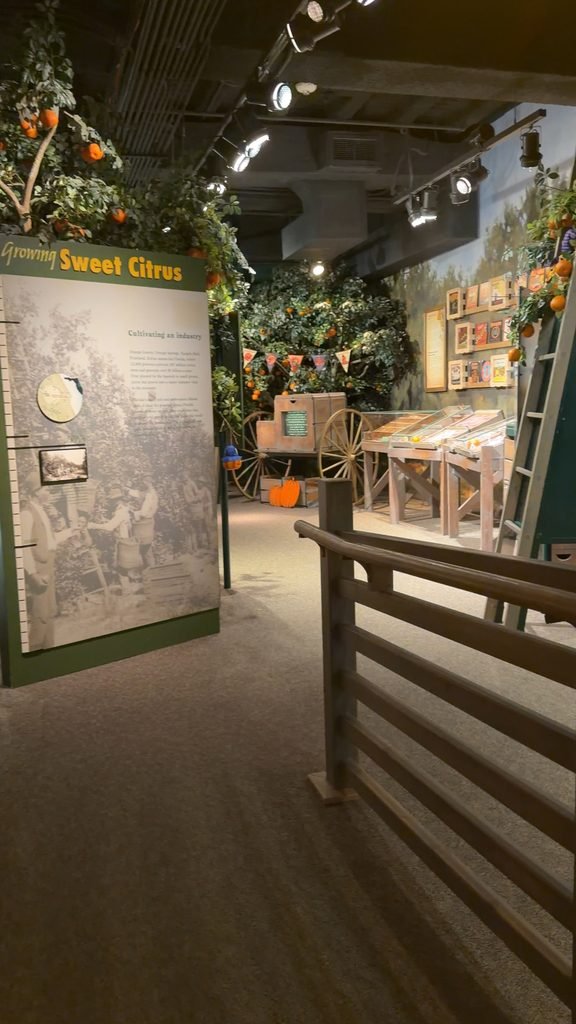
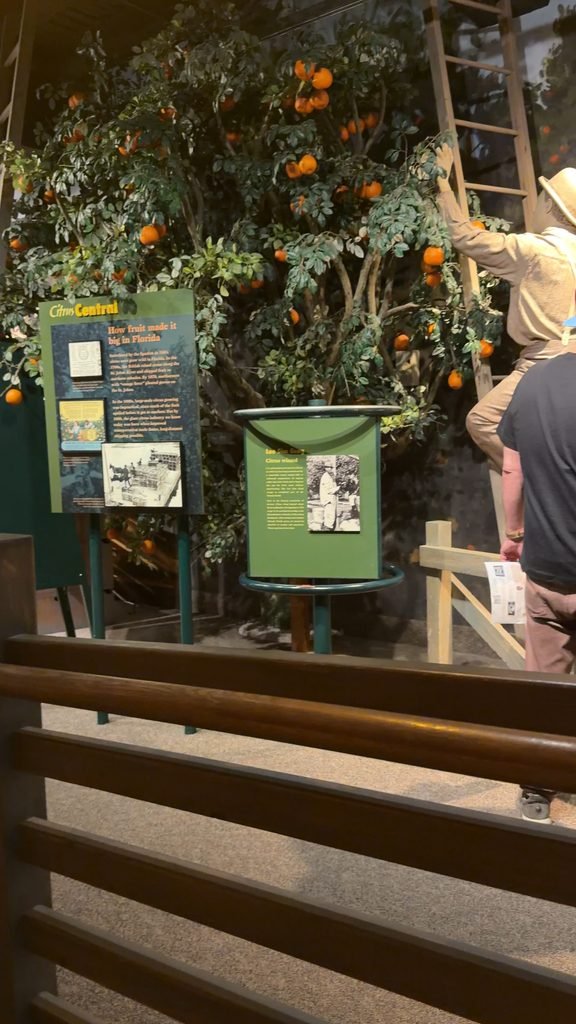
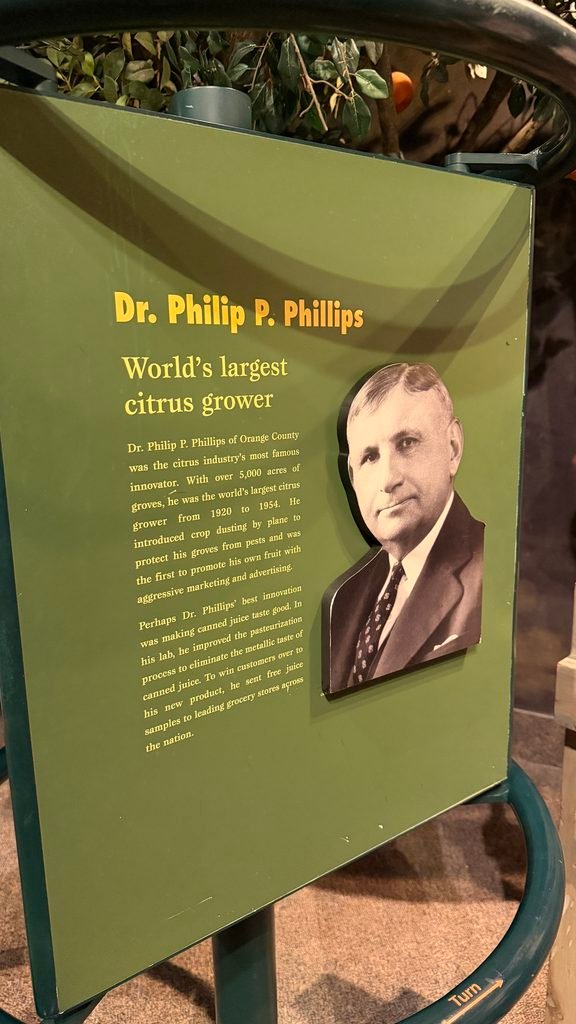
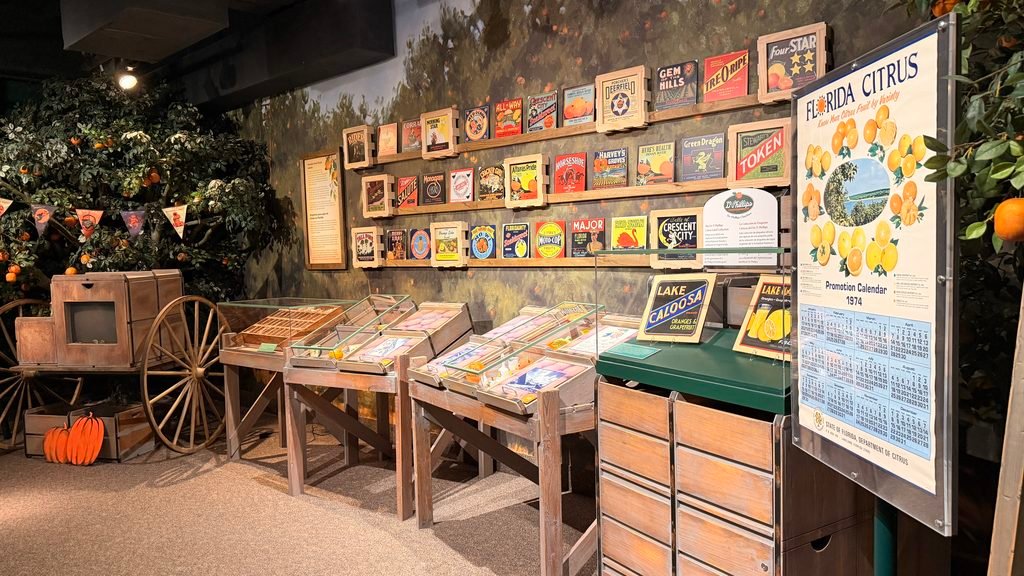
The fourth floor was the one I spent the most time on. The whole floor had a lot of information and was really well built. It was fun and great for pictures and videos, and it had more interactive items than the rest of the museum.
Third Floor: Building a Kingdom, From Steamboats to Disney
Now that we are done with the region’s history, we move on to Orlando’s history in particular, in the exhibit called “Building a Kingdom” on the third floor. This section is a mix of different specific moments that allowed Orlando to become the city we know today.
The Port of Sanford and the Railroads
At first, you learn about the Port of Sanford. I loved how they designed this section to make you feel like you are inside a steamboat (one could argue it could be a train car. What do you think?), looking “out” each window to check out memorabilia and a piece of the history.

This port, through steamboats and railroad, made Central Florida more accessible to more people and, more importantly, gave it a way to move commerce in and out. Until then, the St. Johns River was Florida’s primary highway, and it made it very difficult for farmers to get their crops to northern markets. Enter Henry Shelton Sanford, in 1870, who bought land by the river, on the spot he believed would become the “Gate City of South Florida.”
Hoping to move people and goods deeper inland, where the steamboats could not reach, the South Florida Railroad was built out of Sanford. Because of high costs, the massive investment needed came from Henry Plant, who developed the West Coast and Central Florida railroad lines. It was through Plant’s vision and investments that Central Florida finally became accessible and could export its citrus crops by steamboat and eventually railroad.
Curiosity fact. Henry Morrison Flagler, around the same time, was the man developing the Florida East Coast Railway on the other side of the state. What really gets me about this story is the name HENRY. Did you catch that all of these magnates and visionaries shared the same first name? Should I name my non-existent baby Henry and he’ll be a railroad king too??
I think it is amazing how much difference railroads can make to a region. It is crazy to think that a large portion of today’s railroads in Florida were built around the same time, and how that helped the state flourish from then on. I know the inconvenience of being “stuck” in traffic because of a passing train, but let’s be honest, it is a small price to pay for the development it brings.
The Freeze
An interesting fact is that during the winter of 1894-95, the citrus industry was severely hit by freezing temperatures that destroyed the year’s entire crop. Many citizens that depended on that production for survival left the area, but those who stayed developed a sub-irrigation system which allowed them to produce commercial agriculture.
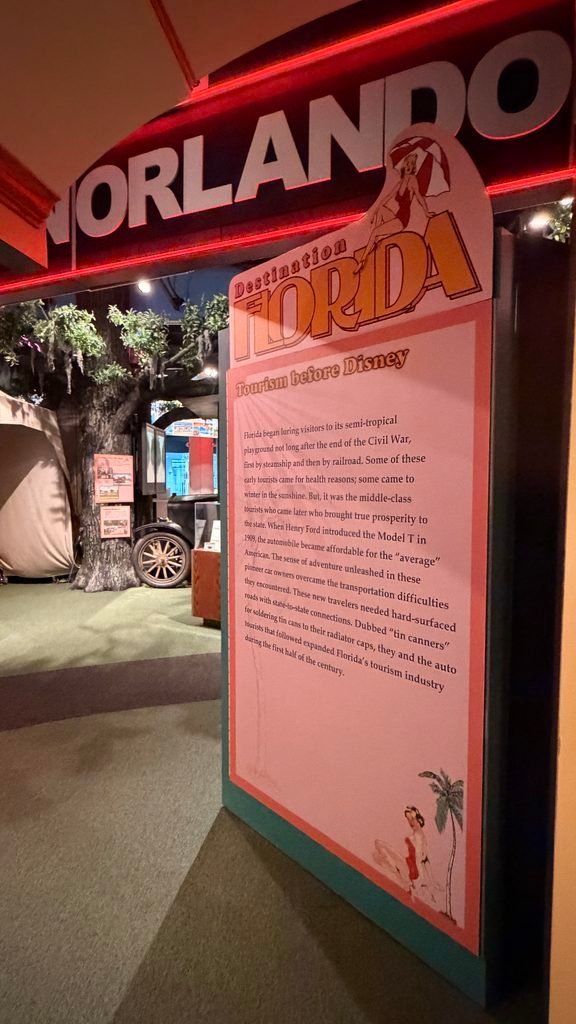
Tourism Before Disney
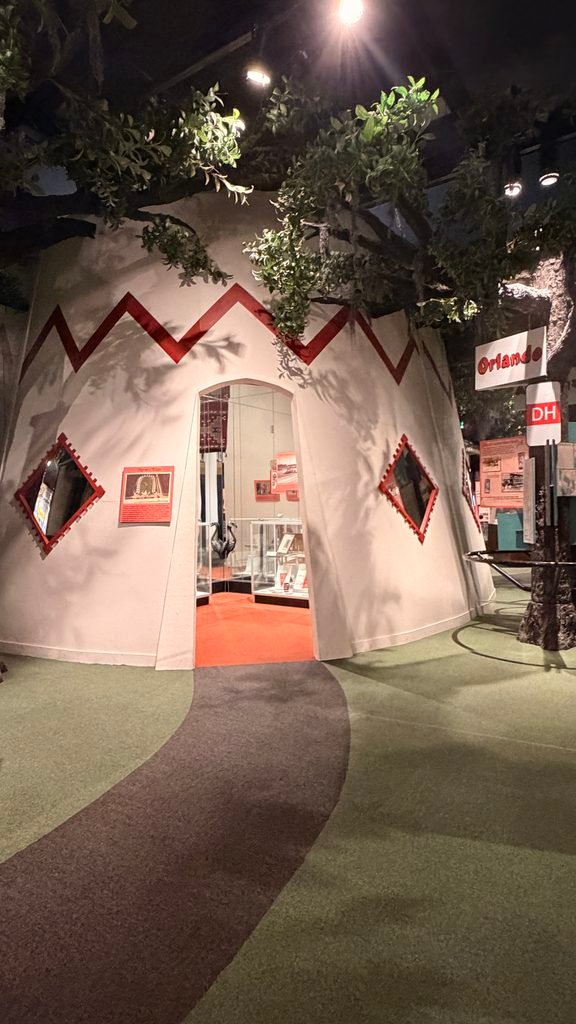
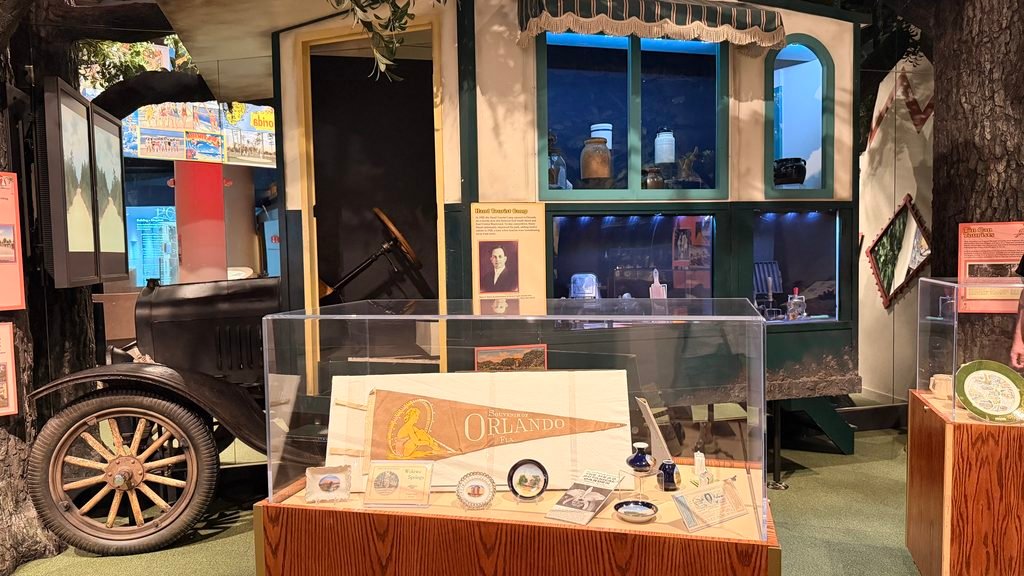
Once Central Florida was put on the map, tourism followed. And that is the next part of the exhibition. What was the attraction to the area when Disney was not the main attraction? In the first half of the 1900s, tourism in the region was related to folks that were looking for warmer areas (either for pleasure or due to doctors’ recommendations, for they believed the Florida air could help with many illnesses), and auto tourists after Ford’s introduction of the Model T in 1908.
Military and Aviation
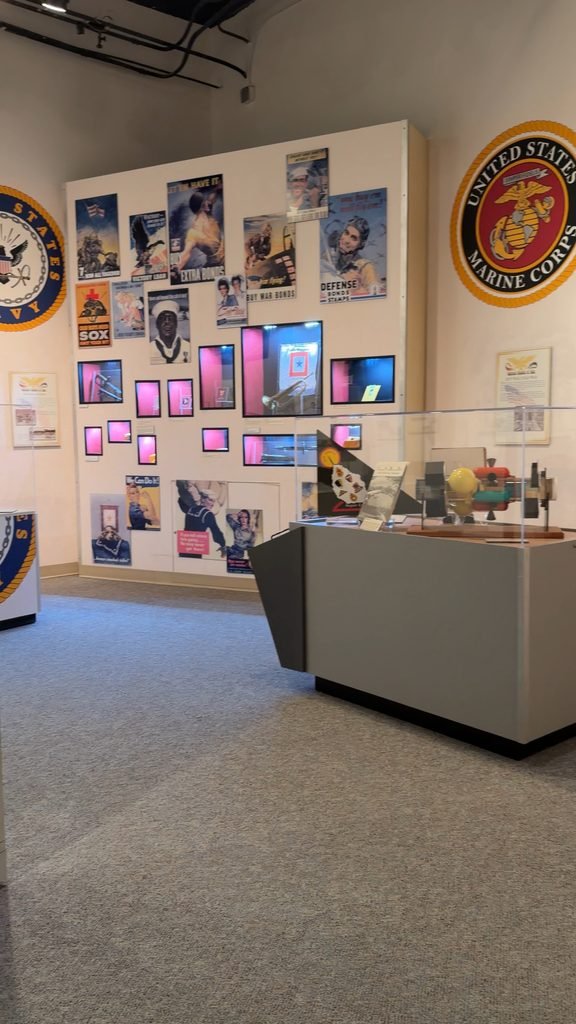
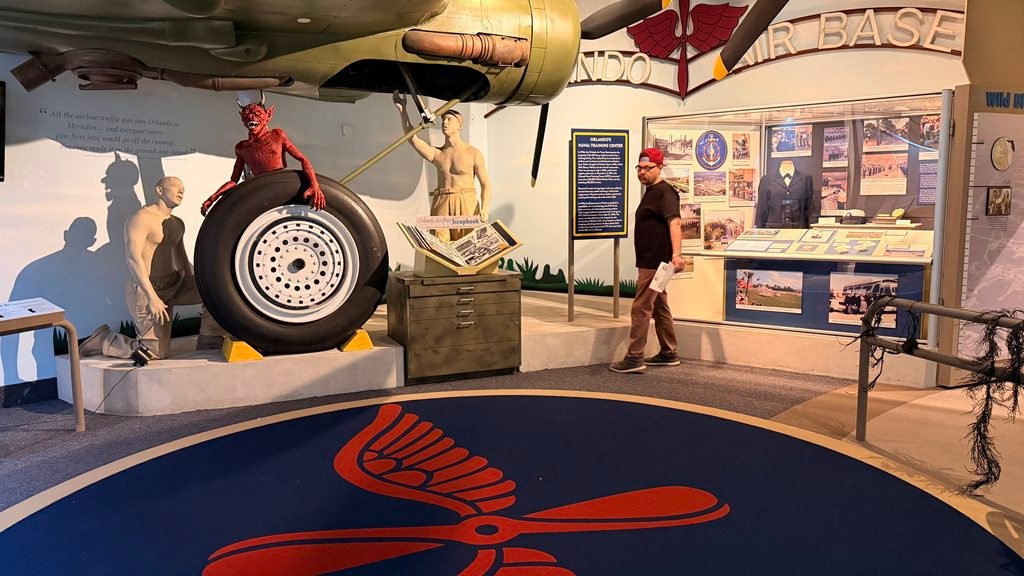
Next comes the exhibit about the military presence in Central Florida, and how it was affected by wars. I’ll be honest: this section didn’t catch my attention, and I didn’t think there was much to talk about. It has memorabilia including vests and clothing used by those who participated in these conflicts, and a room related to Orlando’s Air Force Base with a replica World War II B-17 bomber. The plane replica was very imposing, especially above a large blue and red round rug with the airbase logo on it. Although imposing, I thought it looked more like a theme park kind of detail. What I liked the most was a little devil statue placed on top of the wheel, which went with all the Halloween decorations I mentioned.
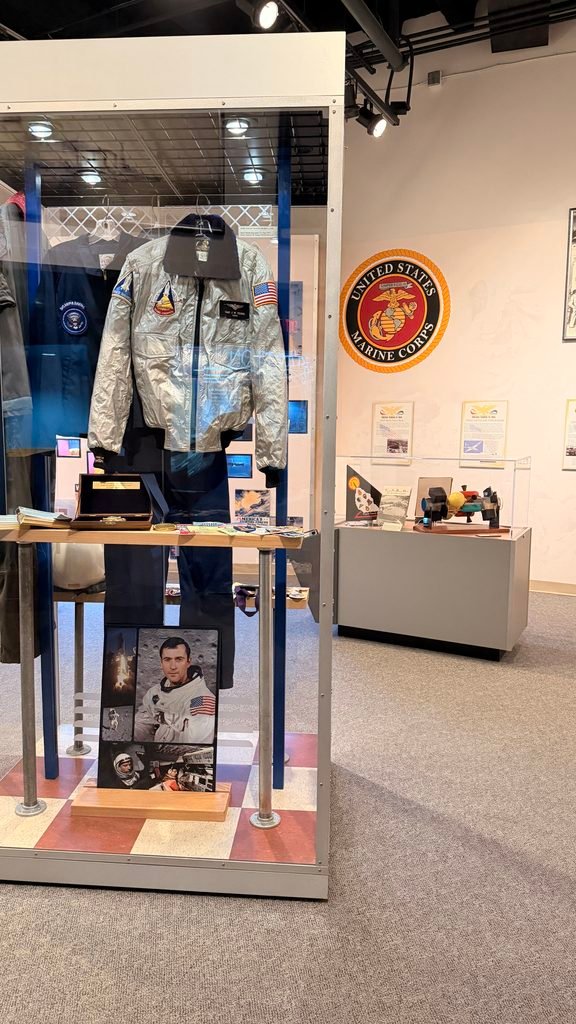
The exhibit also talks about astronaut Capt. John W. Young, an Orlando High School graduate who flew into space six times, walked on the moon, and commanded the first space shuttle flight.
The Day We Changed and the 3D Map
Finally, there is a small section about “The Day We Changed,” when Walt Disney decided that Orlando would be the home for Walt Disney World. There wasn’t much to read in this area. The most interesting thing, for me, was a 3D map of Orlando and the surrounding areas, showing the location of Downtown and Disney. You look at it from above, as if you were looking from the sky, or from a plane yourself, and the lighting makes the map stand out from the dark room around it. Downtown stands at the top as a cluster of tiny skyscrapers, and Disney sits at the bottom, with a castle, a big blue sphere, and other park landmarks built in miniature. In between you can see the lakes, the main roads, and patches of orange and green squares that look like farmland. Model planes hang over the map to represent all the tourists coming in and out, and around it there are stands explaining how the territory evolved. The map shows how far apart Downtown and Disney are, a gap I mentioned at the start.
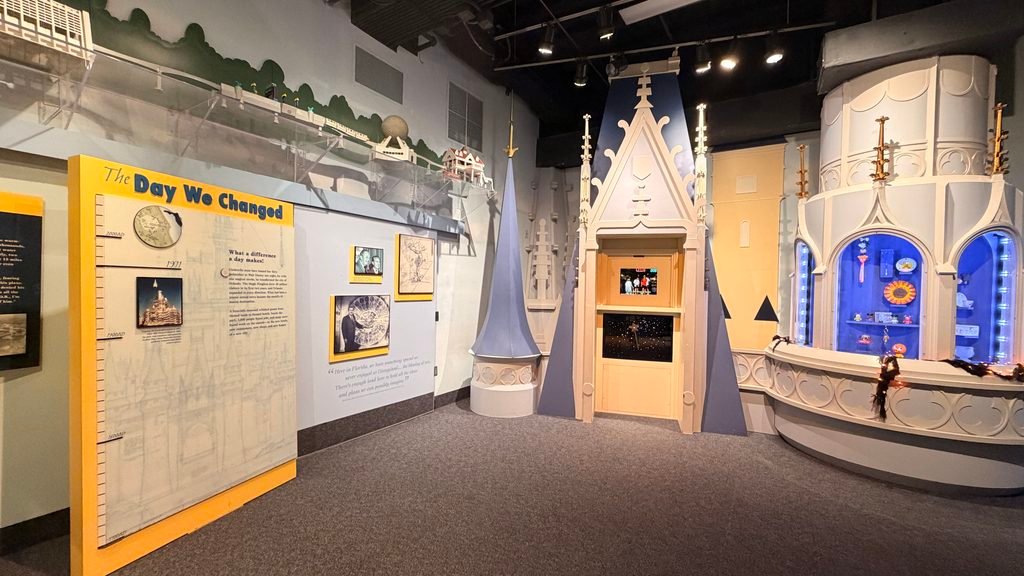
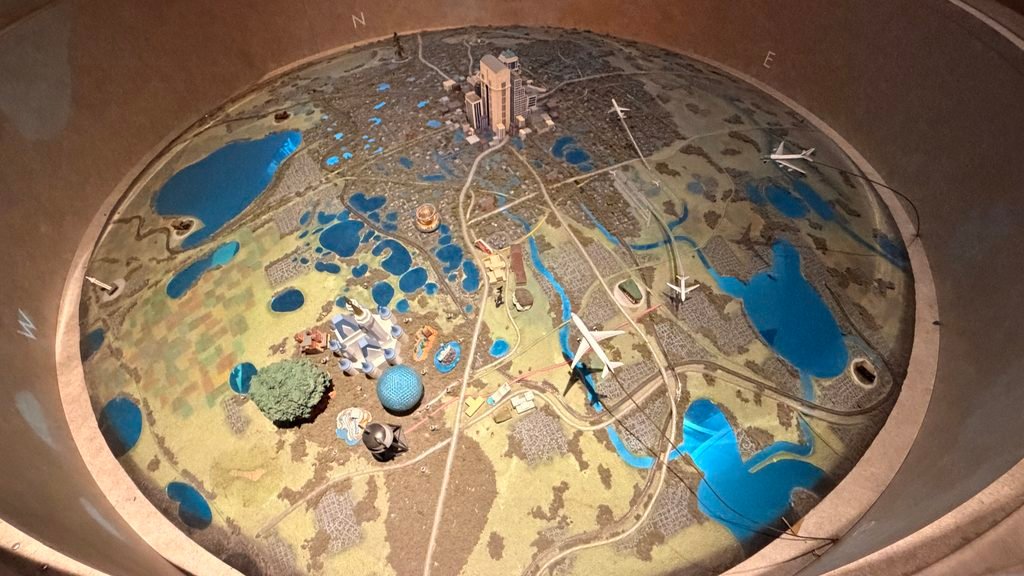
The story behind that map started quietly. Between 1964 and 1965, Disney bought more than 27,000 acres through shell companies with names like Ayefour Corporation (a pun on Interstate 4). After the Orlando Sentinel broke the story in October 1965, Walt and Roy Disney announced the plans on November 15, 1965, at a press conference at the Cherry Plaza Hotel in downtown Orlando, a spot a plaque near Lake Eola now marks. Walt Disney World opened on October 1, 1971.
Second Floor: African American History in Central Florida
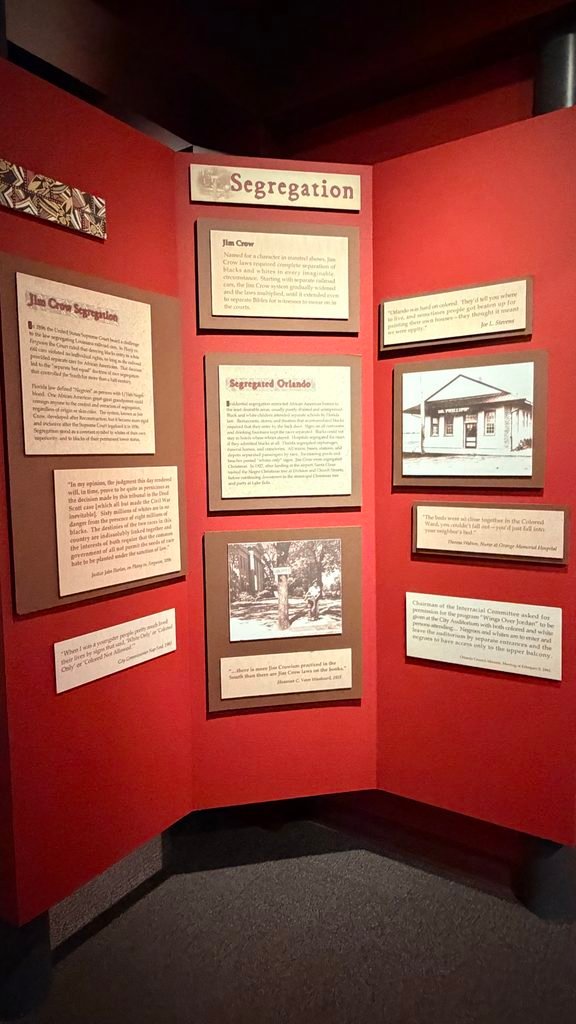
The section about African American history in the region is extensive, and covers stories from the region’s oldest minority community, to all the conflicts, abuses and tragedies it suffered through time, to how it triumphed over the South’s segregation.
This area of the museum is heavy on reading through history. It is mainly composed of passages, explanations, quotes and pictures of the time, with not many items to look at, which can be tiring, in my opinion. But there was one part of the exhibit that caught my attention, and I’d say it is one of the worst parts of that history. It covers the attacks and lynchings that happened here and how the KKK was involved, and there is even a KKK garment on display. It caught my attention especially because it is such a scary thing that happened. Can you imagine people in those robes coming toward you at night? It is hard to think about without feeling how serious it was. I couldn’t help thinking of the Death Eaters from Harry Potter in their hooded robes, and I wonder if real images like this one inspired the author, even though hers are black and these were white. But the Death Eaters are fiction, and this was not.
After Reconstruction ended in 1877, Southern states passed the “Jim Crow” laws that stripped Black people of the rights they had just won, and in 1896 Plessy v. Ferguson made “separate but equal” legal. Orlando used that ruling to draw its map: the city’s zoning commission began designating separate residential areas for Black residents in 1923 and 1924, forcing Black communities out of their long-time homes. Black residents fought back through mass migration, legal defiance, and building their own institutions.
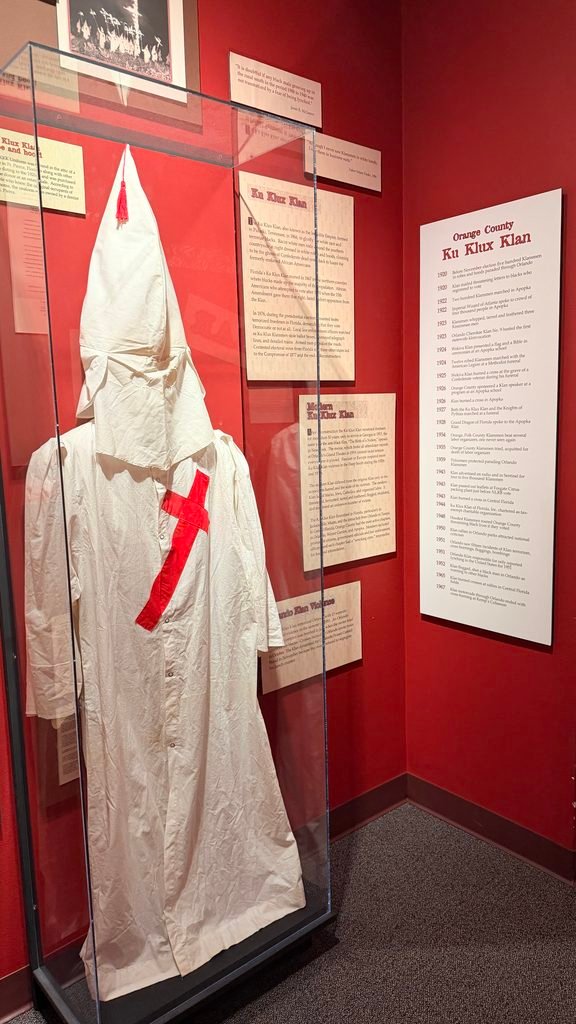
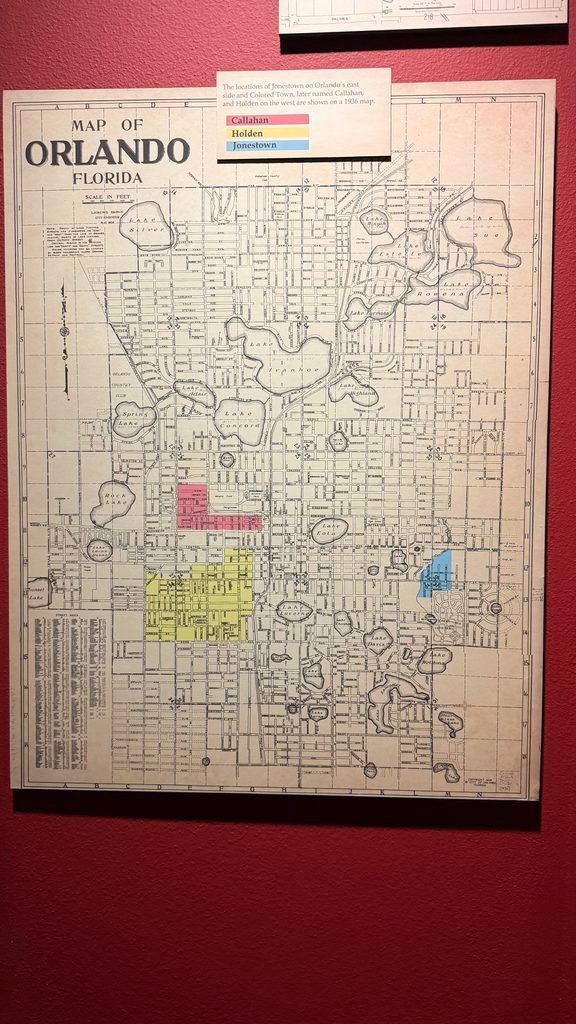
A famous event known as “Ocoee 1920” started on Election Day, November 2, when a Black man, Mose Norman, tried voting in the Orange County town of Ocoee and was turned away. That started a riot which only ended the next day. It left several Black people dead, buildings burned, and the residents of the South Quarters of Ocoee removed from town. One man, July Perry, was lynched in Orlando.
The details of this event vary, including how many people died and exactly what happened at the polls. But in the end, a mob went to the house of Norman’s friend July Perry, two white men were killed there and Perry was captured. A mob took him out of the Orlando jail and lynched him, hanging him from a tree. At least 25 houses were burned. Some accounts place the Ku Klux Klan there. Many Black people left the area, and in Ocoee it was many years before another African American established themselves in that town.
Although that was the best-known lynching story of the area, it wasn’t the only one. The Equal Justice Initiative counts at least 33 lynchings in Orange County between 1877 and 1950, the most of any county in Florida, and Florida had one of the highest per capita rates in the South. The 33 is the number on the July Perry marker in Heritage Square.
Ground Floor: Polar Bears and a Space Capsule
Finally, I was back on the ground floor. There they normally have a small pocket exhibition, which, when I visited, was about the 150th anniversary of the Orlando Sentinel newspaper. But there are also two minuscule corners that contained very interesting items in comparison to their size. Well, I shouldn’t say size. Because the items being exhibited weren’t necessarily small, you see.
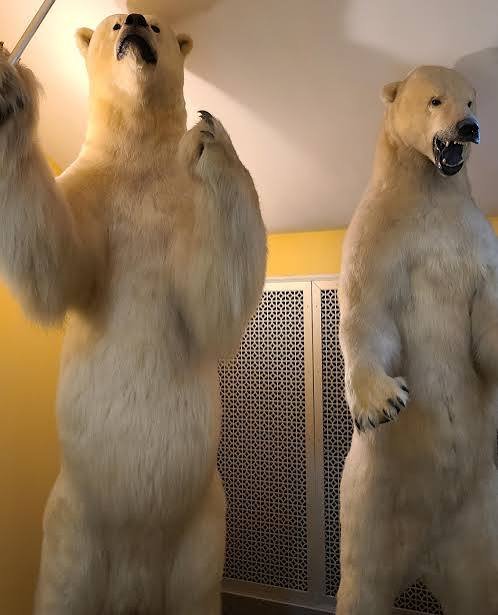
One of the minuscule exhibitions featured two life-size taxidermied polar bears from Bill Baer’s electronics stores, which were a staple in the Orlando area. They even have names! Baerthoven is 9 feet 6 inches and Schubaert, 9 feet. Both served as mascots to the Baer stores between 1964 and 1978. I have to say, it was quite scary. I can only imagine kids’ reactions to these things.
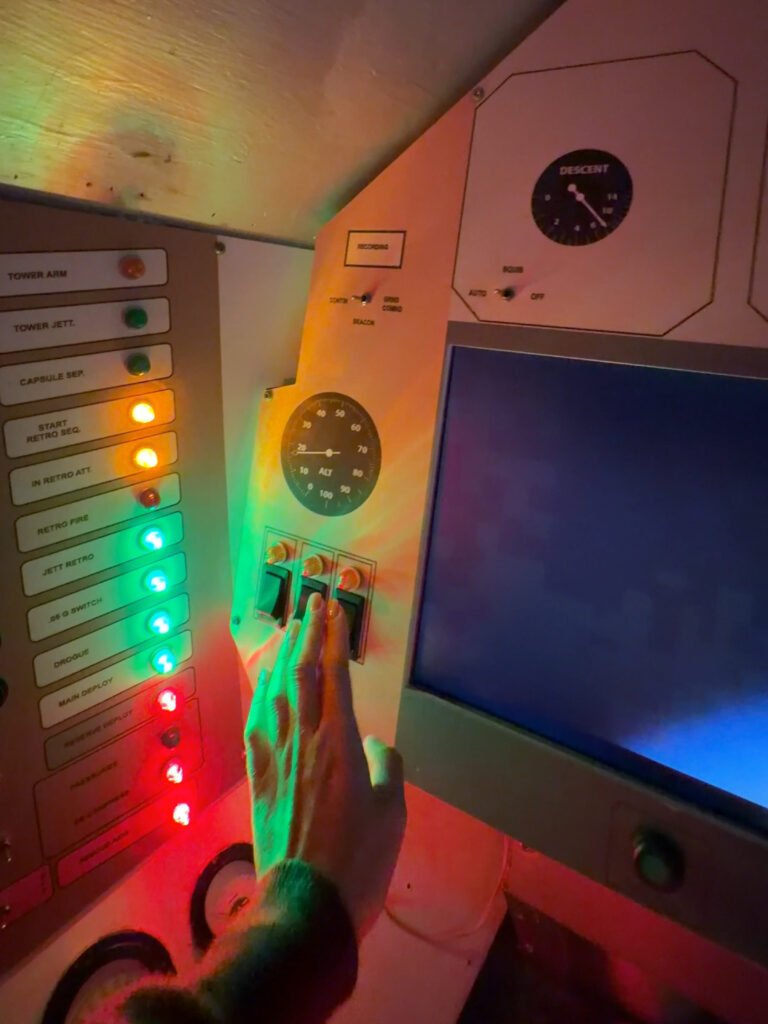
Lastly, there is a recreation of a Mercury space capsule, about 90% the size of the real Freedom 7. Freedom 7 carried Alan Shepard, the first American in space, on a roughly 15-minute flight launched from Cape Canaveral on May 5, 1961. It did not go around the globe. It was a suborbital flight that splashed down in the Atlantic. You can even sit inside the capsule and pretend to be an astronaut! I know I did.

Curiosities & Details
From a Pioneer Kitchen to a Regional History Museum
By 1942 the Orange County community wanted to have a way to look back into its century of history through a pioneer-times exhibit. The first exhibit was displayed in the old Victorian courthouse. The exhibit grew through many donations and is the foundation for today’s Historical Society of Central Florida collection at the History Center. In 1957 that building was demolished, and eventually the contents of the exhibit became the Orange County Historical Museum in Orlando’s Loch Haven Park in 1976. Twenty years later the new high-rise courthouse debuted and community leaders voted to turn the 1927 building into the home of a larger, regional history museum. The Orange County Regional History Center opened in September 2000 and is recognized with national awards. It is even affiliated with the Smithsonian, which allows it to borrow exhibits and artifacts.
A time capsule buried during the construction of the 1959 courthouse annex is waiting to be opened in 2059. I didn’t see anything about it during my visit.
A few more details from the fourth floor:
- Jacob Summerlin, the Cattle King of Florida, used to own the land where Lake Eola is today. The land became a lake after a natural sinkhole formed on it, fed by the aquifer, and he donated the land around the lake to the city in 1883.
- Sheriff David Mizell, killed in 1870, was the only Orange County sheriff to die in the line of duty.
- For years the U.S. ranked second in the world in oranges, behind only Brazil, thanks largely to Florida. Florida’s crop has shrunk sharply in recent years, to its lowest levels since the 1930s.
The Archive You Won’t See: Pulse and the One Orlando Collection
The History Center is the caretaker of the One Orlando Collection, the archive of items collected after the 2016 Pulse nightclub shooting, which grew to more than 10,000 items by 2019. The collection lives with the museum’s research library, the Joseph L. Brechner Research Center on the fifth floor, which is free to the public by appointment. I did not see any access to the library when I visited, so if the archive is why you are going, book ahead. Each summer since 2017, the museum has also put together an exhibition for the annual remembrance of Pulse.
Is the History Center Worth It?
Yes, if you are interested in history. It is fun, interactive, well put together, and talks about a wide variety of subjects.
What worked for me
- The fourth floor: hands-on, really well built, and great for pictures and videos
- The fun facts, from Dr. Phillips to the Henrys to the first DNA conviction
- The Historic Courtroom, and how important it was for criminal cases
- The treasure hunt, and having the museum almost to myself on a Saturday morning
What didn’t
- The second floor is heavy on reading, with few items to look at, and the audio displays are only on the fourth floor.
- The building runs cold
- Nothing tells you which end of the fourth floor to start from. It depends on whether you took the stairs or the elevator, and I started at the wrong end.
- I couldn’t find the carved table in the courtroom, the jail, or the time capsule, and the Murry S. King Gallery was closed (the museum says it is used for events only)
Who it’s for: Anyone who is interested in history. It is accessible for wheelchairs, and I felt comfortable going alone.
Who should skip it: Anyone without the patience for a self-guided tour with a lot of reading, especially on the second floor. The fourth floor is the only one with real hands-on stuff.
All sections are interesting, but not equally. I’d skim the military and aviation section, which didn’t hold my attention, and spend that time on the second floor, heavy reading and all (details in the second-floor section). The moments I would tell a friend about are the fun facts and the courtroom, because of how important it was for criminal cases with the DNA conviction.
The Orange County Regional History Center is the perfect place to start a non-theme-park trip or day of Orlando exploration, for it gives you a lot of the history base to understand the city’s growth and development, but also to make connections with other important landmarks and neighborhoods.
Essential Things to Know
Floors. The History Center has four visitor floors: the ground-floor lobby, with a small rotating pocket exhibit, and three floors of permanent exhibits on floors two through four. The building itself has five stories, and the top one holds a research library.
Accessibility. The museum is accessible for wheelchairs. Here is what I found:
- Getting around: Elevators, restrooms and water fountains on every floor, and benches by the stairs in case someone gets tired.
- Doors: The doors are heavy, so there is a push button that opens them for wheelchair users.
- Wheelchairs: Available to borrow. I called the front desk to ask.
- Accessible parking: I did not test it.
- Audio: Only the fourth floor has interactive audio displays: you press a button and the display speaks or plays sounds. I don’t know whether there’s a self-guided audio tour, so ask at the front desk.
- Captions, large print and sign language: The staff member was not sure, so call (407) 836-8500 before you go if you need any of those.
- Sensory Sundays: Events for kids with sensory issues that make the museum more comfortable and accessible. They are not held every Sunday. The dates I was given are February 14, May 23, August 15 and October 17, 2027, with no more dates for 2026, so check the events page.
- Sensory backpacks: Available any day at no extra cost with admission. A sign at the front desk explains it: ask a staff member, fill out a rental form, and return the backpack to the front desk before you leave. It is first come, first served, and it comes with a weighted plush, headphones, sunglasses, a fidget spinner, a flashlight and a few other items to help with a sensory break.
Renovations and closures. The museum’s website says several renovations, improvements and updates are happening right now, and recommends calling ahead at (407) 836-8500 if you are planning to see a specific exhibition, so you know that part of the museum is open. When I went, the Murry S. King Gallery on the second floor was closed. The museum told me the gallery is used for events only.
Free admission. Children 4 and under, museum members, Orange County employees, and Florida educators get in free. Check the museum’s website for the full list.
Weather and shade. It was a pleasant day, not too hot, and not raining. The square doesn’t have much cover, but it has plenty of trees and places to sit, so you can find good shade.
Parking time. Street parking downtown has a limit of two to three hours, and you can’t add more time to the meter. Most downtown spots work this way on purpose. The Library Garage validation covers about two hours too. The museum can take that long on its own, so if you also want to walk to Wells’Built (about 15 to 20 minutes each way) or stay in the area longer, park in a garage or use a taxi or rideshare service. I drove over because my meter was running out.
Nearby. Right across the street is the Orlando Public Library, and there are plenty of businesses around, including coffee shops and restaurants. Event venues such as the Kia Center are walkable too, and so is the Wells’Built Museum.
Wells’Built: The Other Side of Downtown
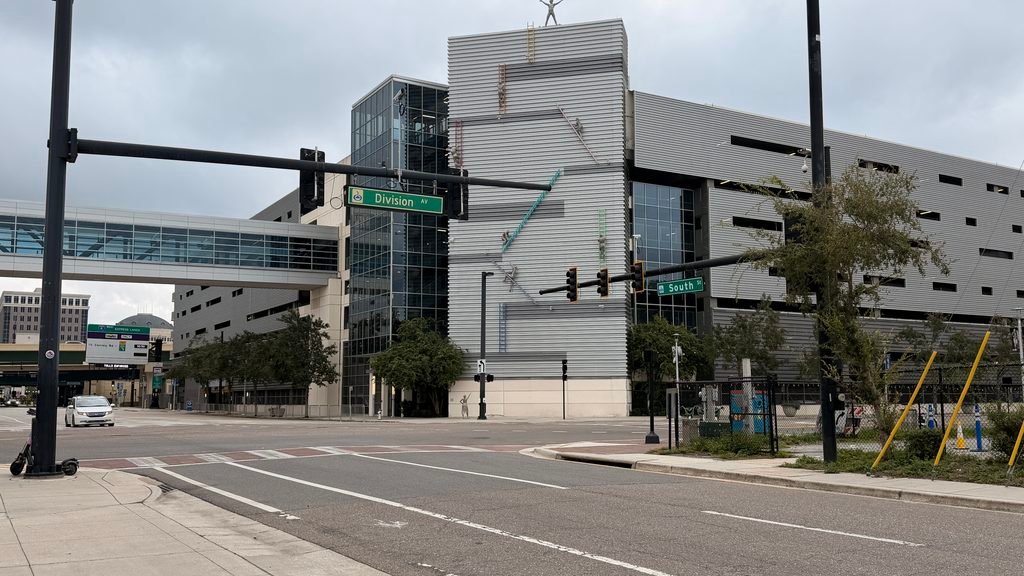
Division Avenue was not an official division between the white and Black zoning, but today it is a symbol of Orlando’s segregation period, and it is about a 15 to 20 minute walk (less than a mile) from the museum. On that same block, at the corner of Division Avenue and South St, you will find the Wells’Built Museum of African American History and Culture, contrasting with the 2010 Kia Center Arena with its modern structure. The museum is found in the original building of a 20-room hotel that Dr. William Monroe Wells opened in 1929 (he got the building permit in 1926). It offered safe lodging to African American travelers, athletes, and entertainers such as B.B. King, Ella Fitzgerald and Ray Charles.
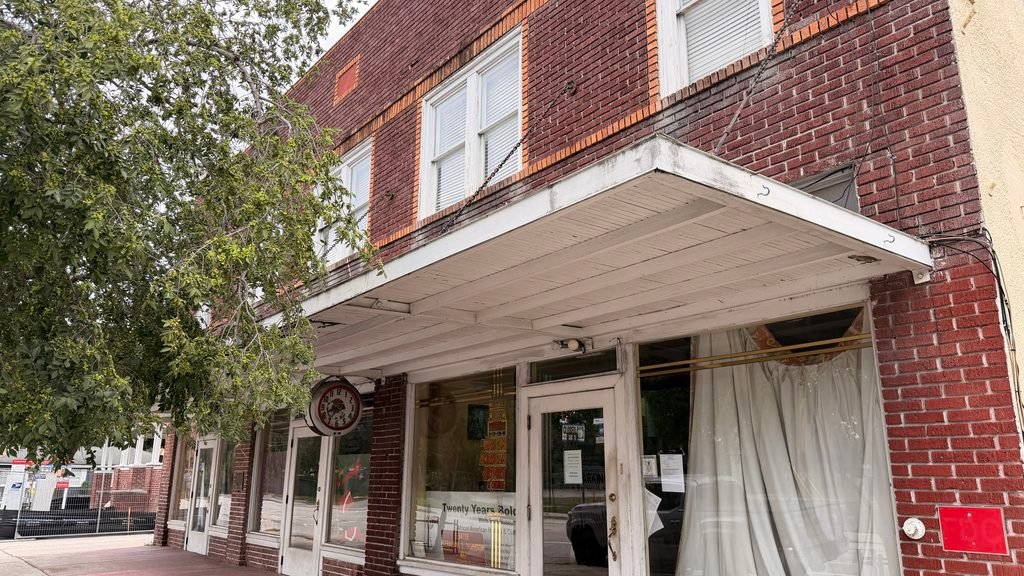
I’ll be honest, this stop was a letdown. I drove there because the timer on my parking spot did not leave enough time to walk, and the museum was closed when I went. What made it worth the drive was the contrast. After the columns and heavy golden doors of the 1927 courthouse, the neighborhood around Wells’Built is mostly simple houses, and Black residents still live there. Driving through it felt a bit worrisome to me. I can only tell you how it felt to me, but the difference between downtown and this area was visible, almost palpable. The neighborhood sits in a bubble of poverty between the Kia Center and Inter&Co Stadium, two big, shiny venues, and that made the gap stand out even more.
July Perry is buried at Greenwood Cemetery, in the section that was set aside for Black residents, so the cemetery is the other half of the story you read on the second floor.
I went downtown to find out what was here before the theme parks, and the answer took up four floors. It was only after the visit that I realized how much of it I had been driving past. I lived in Orlando for two years. I drove past Dr. Phillips and the roads named after these people all the time, and I never made the effort to ask who they were or where the city came from. It took leaving the city for me to finally do my research. Go early on a Saturday, give it about two hours, and call ahead if there is one exhibit you came for.