Before Florida was air-conditioned resorts, luxury malls, and theme parks, it was an uninhabitable swamp, until one brutally ambitious oil tycoon decided to spend his fortune carving an European palace into the palm trees. That palace is now the Flagler Museum in Palm Beach.
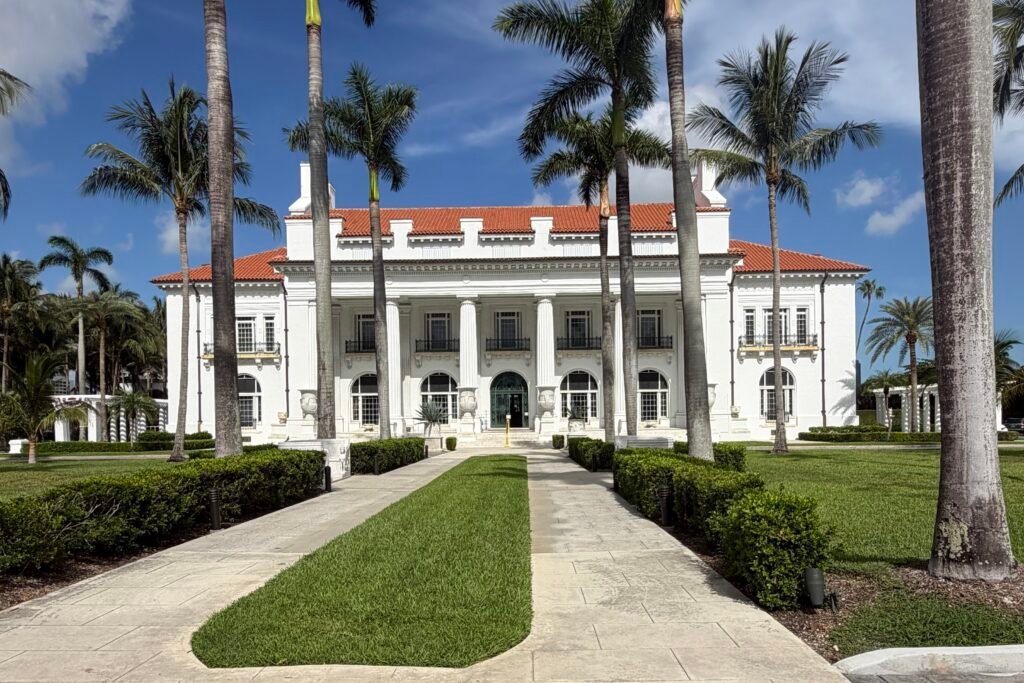
The Flagler Museum, on Palm Beach Island, rivals many European palaces in history, style, and decoration. Its crown jewel, the Whitehall mansion, is a 100,000-square-foot, 75-room residence that was completed in only 18 months, from top to bottom, including all the interior decoration. Nowadays, you can barely get a kitchen remodel done in such a time span!
My verdict: yes, it’s worth the visit, and the Lake Trail walk just outside the gates is half the reason.
Flagler Museum Quick Facts
- Address: 1 Whitehall Way, Palm Beach, FL 33480
- Hours: Tuesday to Saturday, 10 a.m. to 5 p.m.; Sunday, 12 to 5 p.m.; closed Mondays
- Admission: $28 for adults (ages 13+); free for Museum members. Check the museum’s ticket page for child pricing.
- Parking: Free in the museum lot during museum hours
- Tours (included with admission): Docent-led tour of the first floor at scheduled times, audio wand tour (English, Spanish, French, German, and Portuguese), and a free app tour
- Time needed: 2 to 3 hours; a little over 3 if you do both tours and the Lake Trail walk
- High Tea season: The day after Thanksgiving through Easter Sunday. In spring 2026, non-member adults paid $93, which includes museum admission.
- Accessibility: Elevator, ramps, and an accessible entrance (details under Essential Things to Know)
From Sleeping Under a Worktable to a Wedding-Gift Palace
Here’s the short version of who built this place and why.
- The man. Henry Morrison Flagler was a very rich and very ambitious self-made entrepreneur. But he wasn’t always wealthy. On the contrary: he was born in 1830 in Hopewell, New York to a humble family, and as was common then, he only completed his education through the 8th grade. At 14, he started working at a Harkness family general store in Ohio, paid $5 a month plus housing, which, as the story goes, was a bed directly under the table he worked from. At this point, one may ask: “How does someone grow and evolve from that to being one of the richest men of his time?” Vision and commitment surely played a huge part.
- The reason he came to Florida. He didn’t come for a vacation; he came because his wife was dying. His first wife, Mary, became very ill with tuberculosis, and doctors recommended a warmer climate, so they went to Jacksonville in 1878. Mary passed away in 1881. What he did next (hotels, a railroad all the way to Key West) has its own section under Curiosities & Details.
- The gift. In 1901, he married his third wife, Mary Lily Kenan (his second wife, Ida Alice, had fallen mentally ill and was institutionalized), and gave her the Whitehall estate as a wedding gift, which historians put at about $4 million. I’d bet it was also his way of smoothing people’s opinions about her, since he was 37 years her senior and plenty of people probably saw her as a gold digger.
What Not to Miss at the Flagler Museum
The Grand Hall and Its Seven Kinds of Marble
Once you arrive at the museum, you are faced with this beautiful white Neoclassical building featuring marble columns on its facade, which contrasts with the big, black ornate iron gate. It could easily be the house of a magnate in a Gone with the Wind kind of movie. But bigger. Like, 8 times bigger.
As Scarlett O’Hara would say: “I can’t think about that right now. If I do, I’ll go crazy. I’ll think about it tomorrow.” …that kind of bigger.
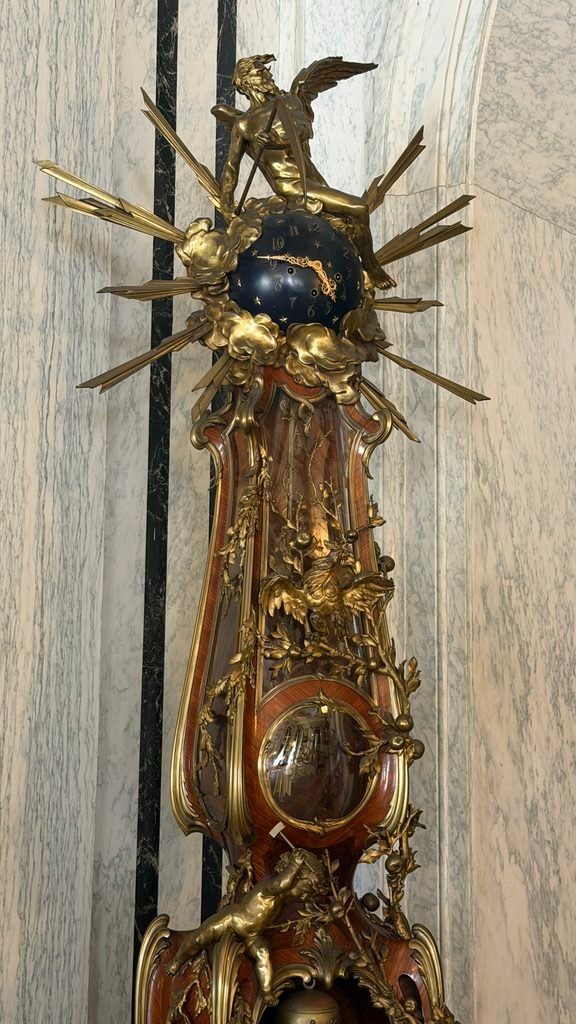
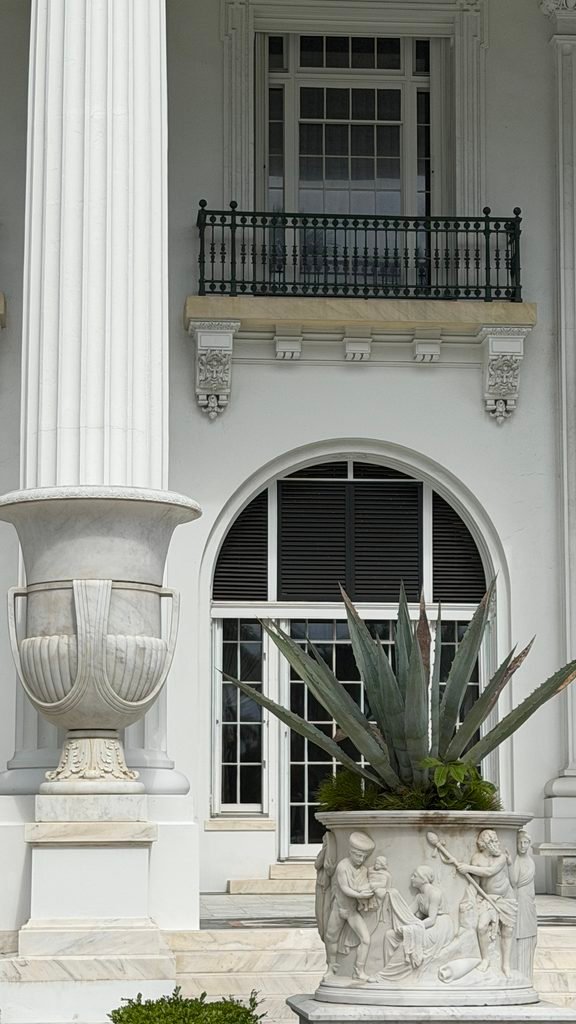
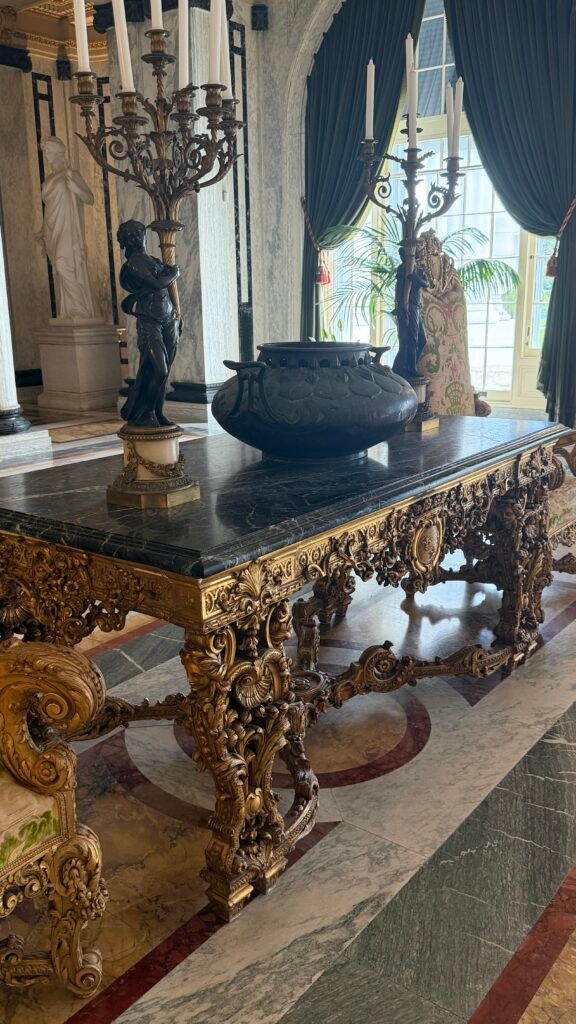
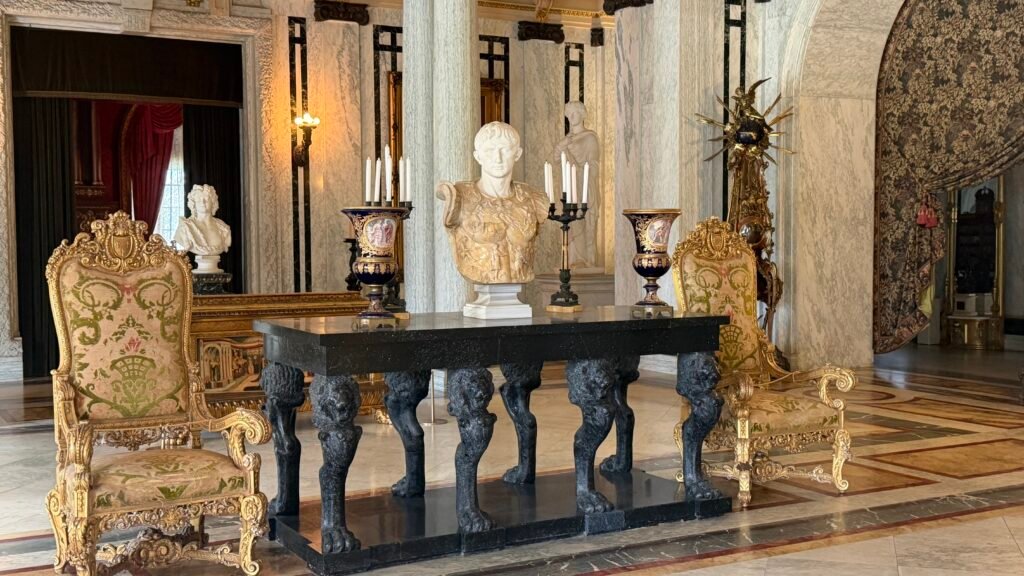
From the moment you step foot into the Flagler Museum, you can feel the history and the wealth within its walls. The entrance hall is a large room fully decorated with seven different types of marble. Everywhere you look, you see how much thought was given to the details, which makes the fact that the whole mansion was built in 18 months even more absurd.
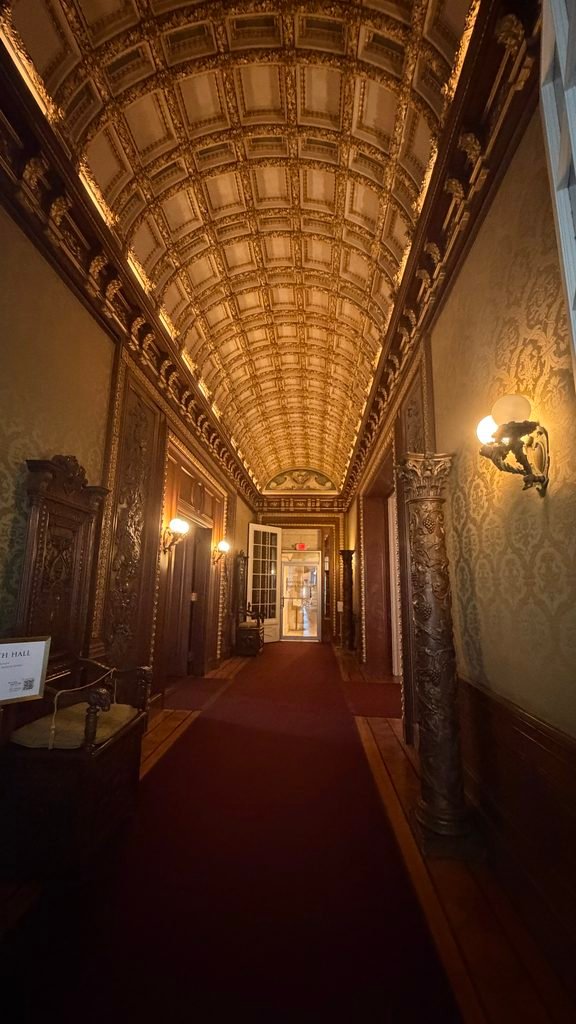
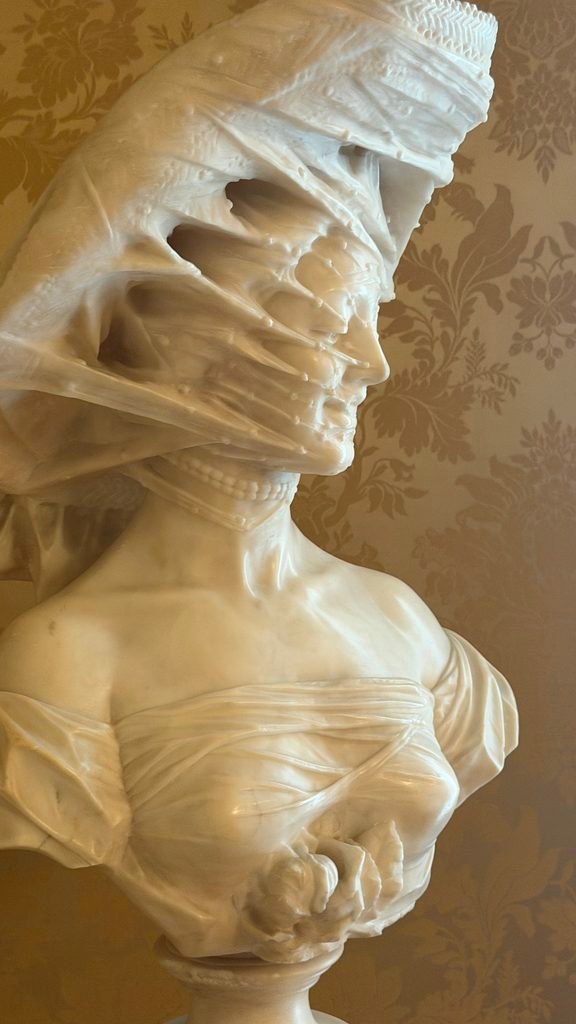
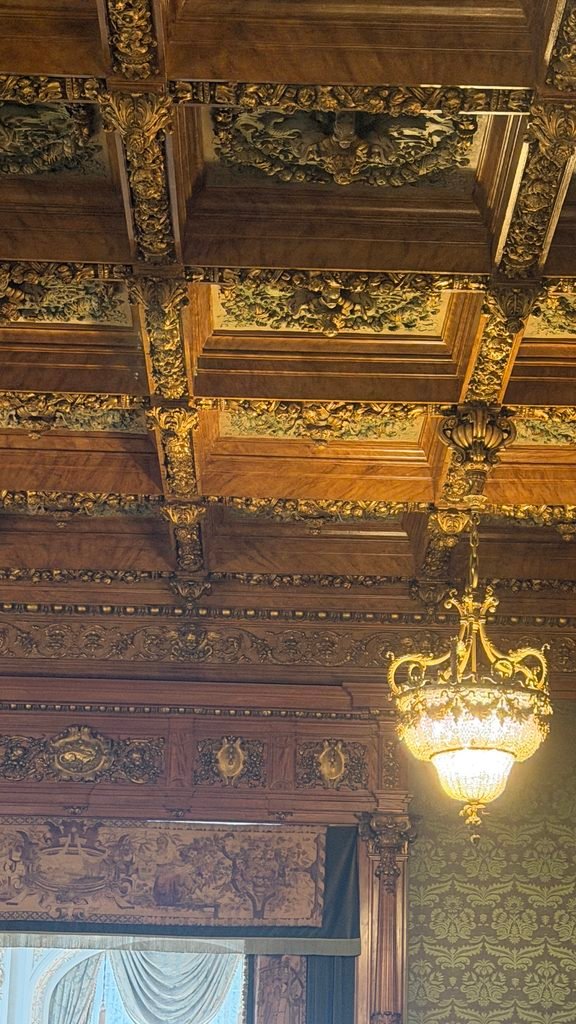
The first thing I noticed was the magnificent double staircase, which overlooks the outside atrium with a beautiful statue in its center. But we are getting ahead of ourselves! Back to the entrance hall.
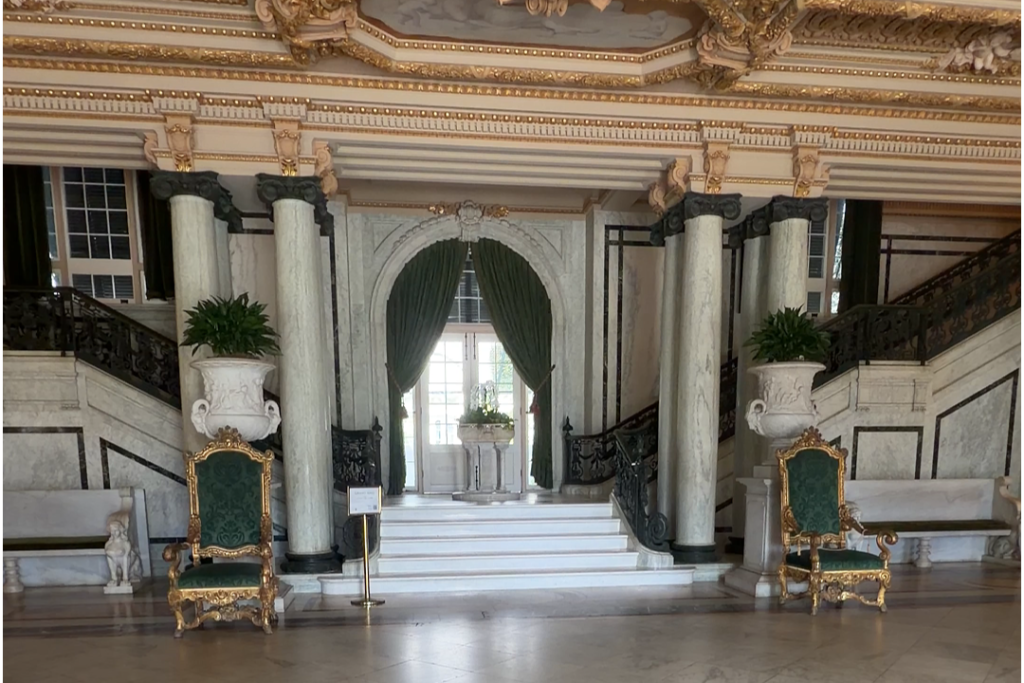
The Grand Hall may not look that large, but that is only due to the low ceiling. Normally in a construction like this, the ceiling would be at a much higher footing, but Henry Flagler asked the architects to drop it eight feet below the original design for a more intimate feel, so his guests would feel welcome when they walked through the doors, not intimidated. In reality, this entrance hall measures 5,000 square feet. You could fit a basketball court within these four walls!
The ceiling at the very center serves as the canvas for the Pythia, the Priestess of the Oracle of Apollo at Delphi. Apparently, wealthy folks during the Gilded Age saw themselves as the heirs to classical Western Civilization (and perhaps they were), so why not show off by placing a “Temple of Apollo” as the focal point of this enormous room? I guess a high ceiling in addition to the painting could be seen as a tad too much? We all have our limits.
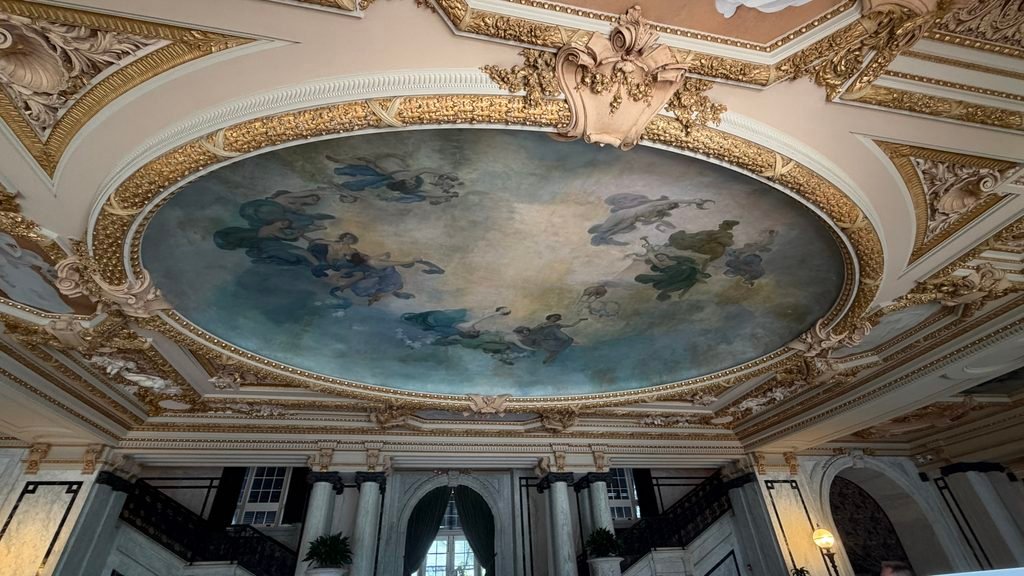
Grandiose jokes apart, you must admit that this wedding gift was a legacy left not only to the Flagler family, but also to Florida’s history.
Before you head through the curtained doors to your left, notice the large portrait of Henry Morrison Flagler. We must put a face to this legend!
The Library: Famous Names, Not Many Books
Once you start your tour, you will see his Library, which contains a big logbook with names and signatures of famous people who visited and stayed at Flagler’s home, such as J.D. Rockefeller himself and Thomas Edison.
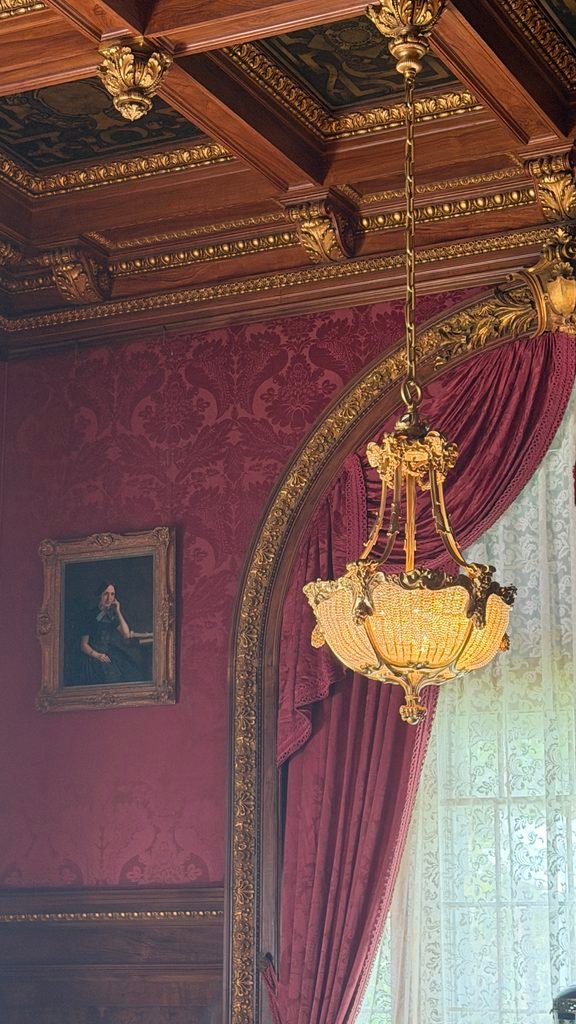

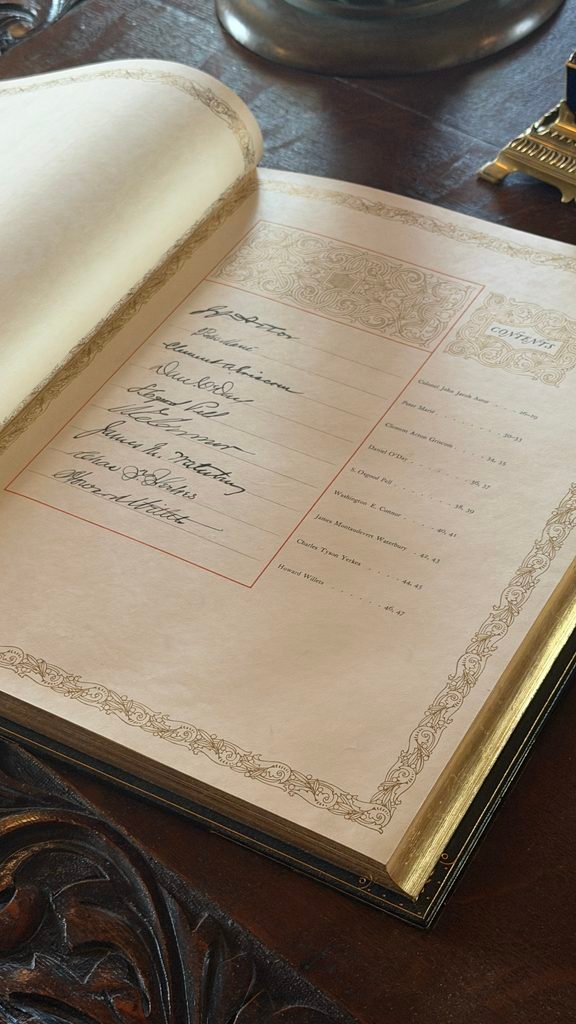
A special detail pointed out by the six-year-old girl who participated in the guided tour with me was that there were not actually that many books in that library. If you are a book lover just like me, you will find it somewhat disappointing, especially if your idea of a home library is the one displayed in Disney’s classic Beauty and the Beast.
The Music Room and Its Church-Sized Organ
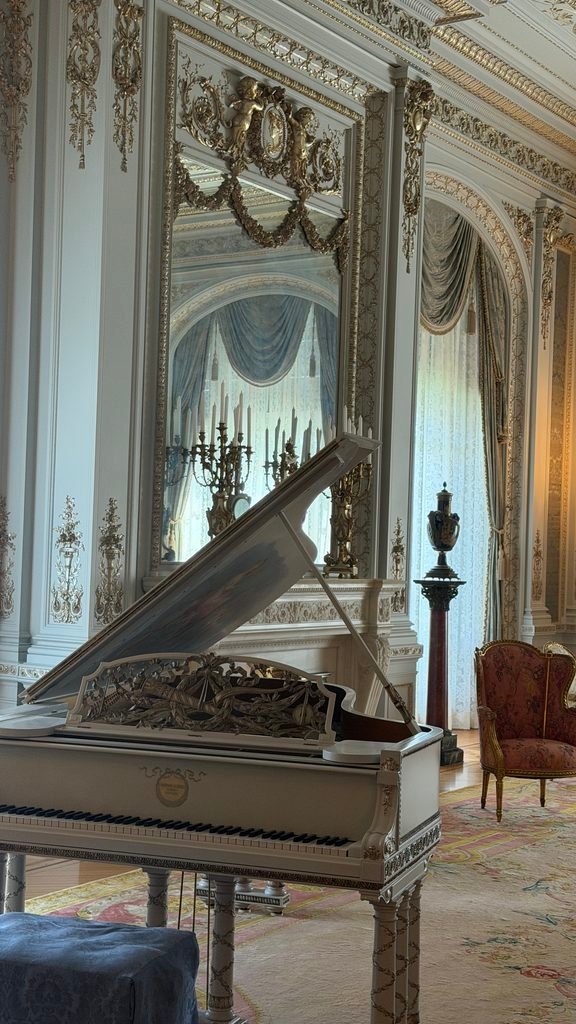
Next, you will walk into the Music Room. This is a large rectangular room with a piano and a huge organ at the very end. That organ (1,249 pipes, per the museum) is probably as big as, or bigger than, the ones in many churches! It was often used for Flagler’s guests’ entertainment and could be heard throughout the entire estate.
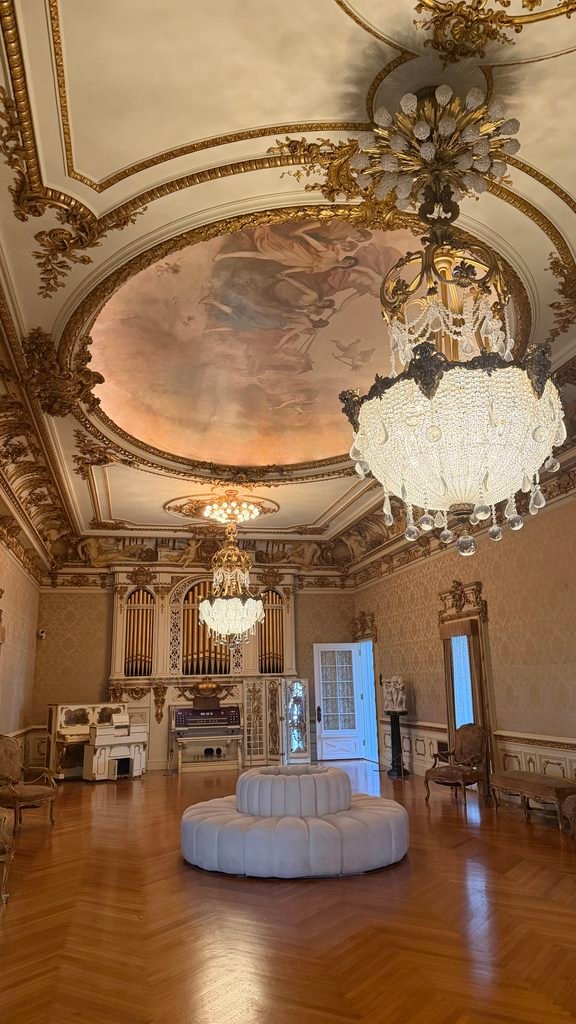


That music room was used so often during the winter season that Flagler hired a resident organist for each season to play at their residence. And for times when the player was not on duty, they used an automated self-playing mechanism (similar to a player piano) that allowed them to enjoy the instrument at the touch of a button. That is what I call being ahead of its time!
The Billiard and Drawing Rooms: Where the Snowbirds Partied
It was during Flagler’s takeover of Florida that the “Snowbird” culture started around here. Most of these wealthy folks, including Henry Flagler himself, would only enjoy South Florida’s beauty during a short period in the winter months when it became too cold in their Northern residences. But when in Florida, the Whitehall residence was the center of social party encounters.
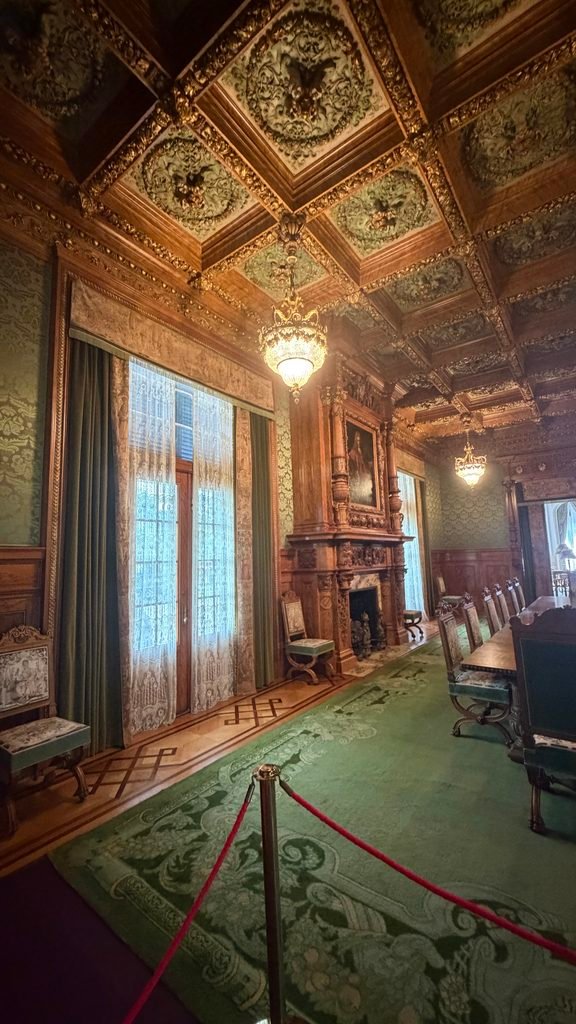
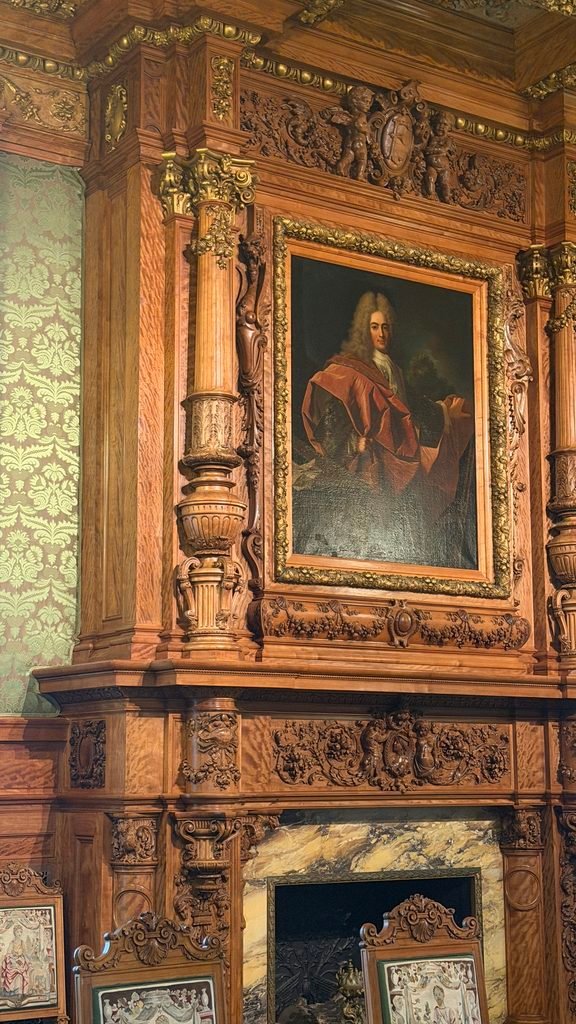
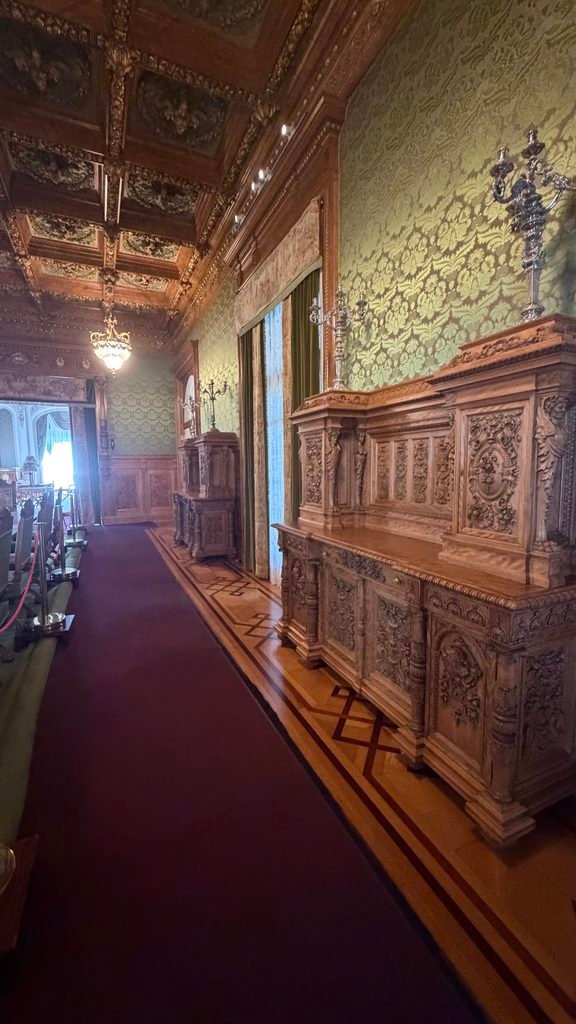
During your tour, you will see the formal dining room where more intimate parties would start, but also the heavily wood-decorated Billiard Room where the men would smoke cigars, play billiards (obviously), drink whiskey, and plan new ways to conquer the world (at least that is what I like to imagine they talked about!).


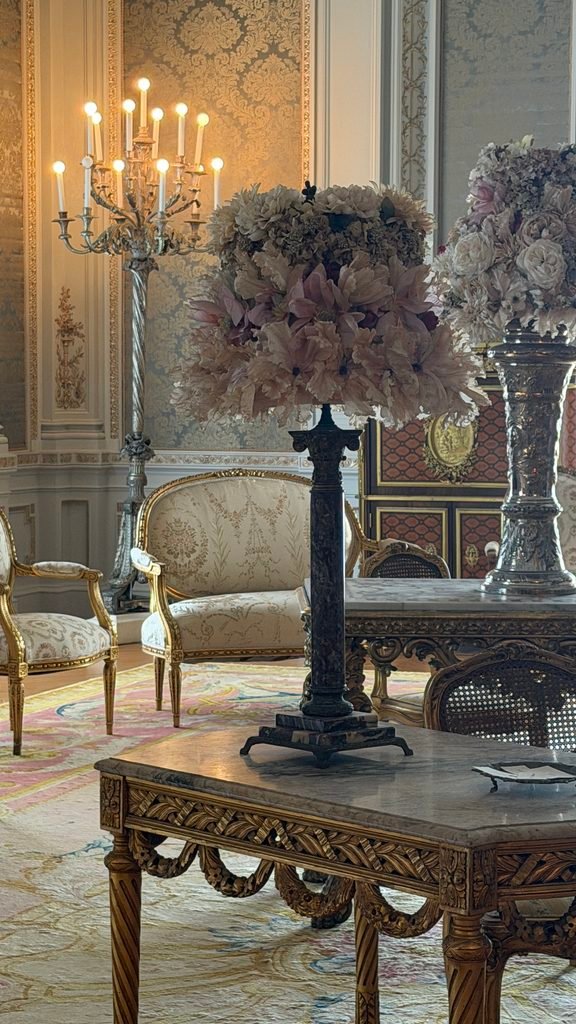
Meanwhile, the ladies would move to the Drawing Room, decorated in very feminine beige, light blue, and pink hues, to discuss their marriages, exchange recipes, and gossip about the ladies trying to make their way to the top who would “never have enough class to do so.” Again, that is what I imagine they would talk about, but in reality, they were most likely talking about much more serious matters like Women’s Suffrage and Legal Rights, since the Suffragette Movement was in full swing in the early 1900s.

The Ballroom: Mirrors, Windows, and a Not-So-Pretty Carpet
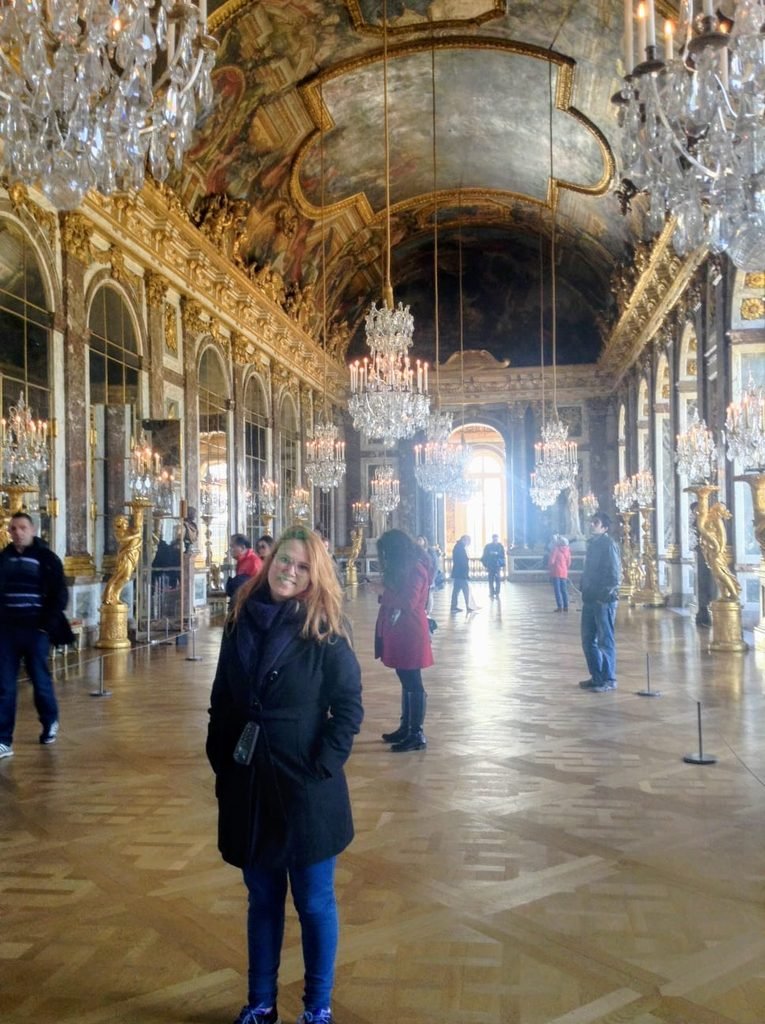
Part of their social obligations involved lots of partying, bringing us to one of the largest rooms in the house: the Ballroom. Per the guided tour, the room was inspired by the Hall of Mirrors at Versailles (the museum describes the style as Louis XV). Instead of being mostly mirrors, Flagler’s design alternates between mirrors and windows, deliberately planned to allow cross-breezes that help cool the room against Florida’s heat.
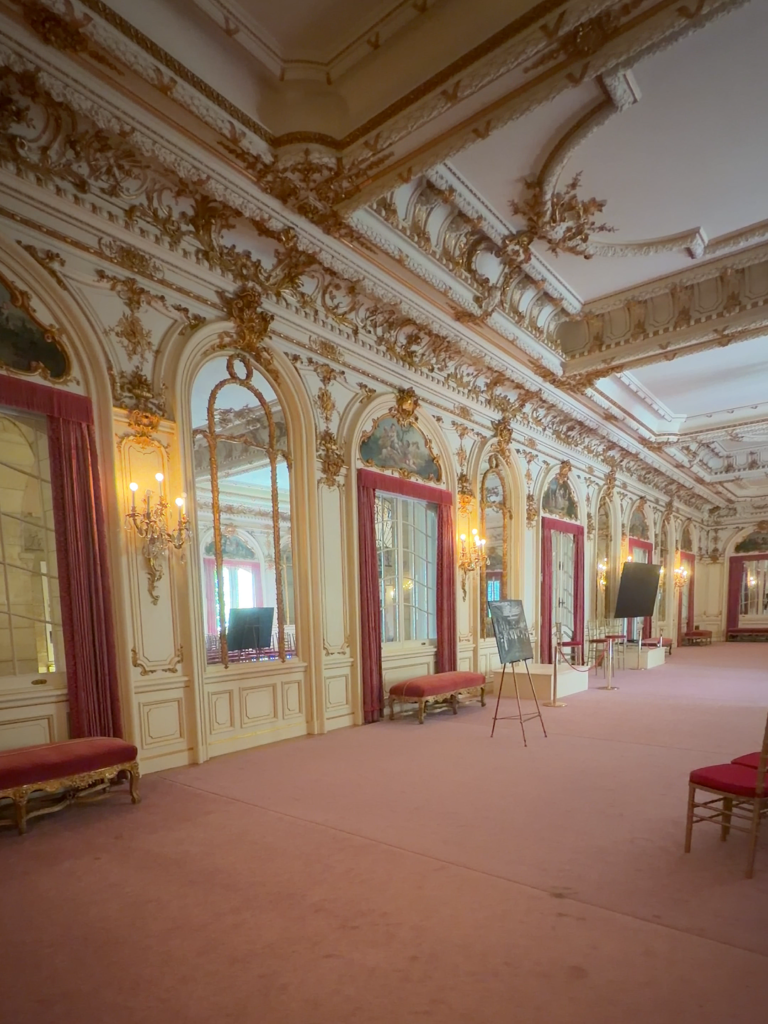
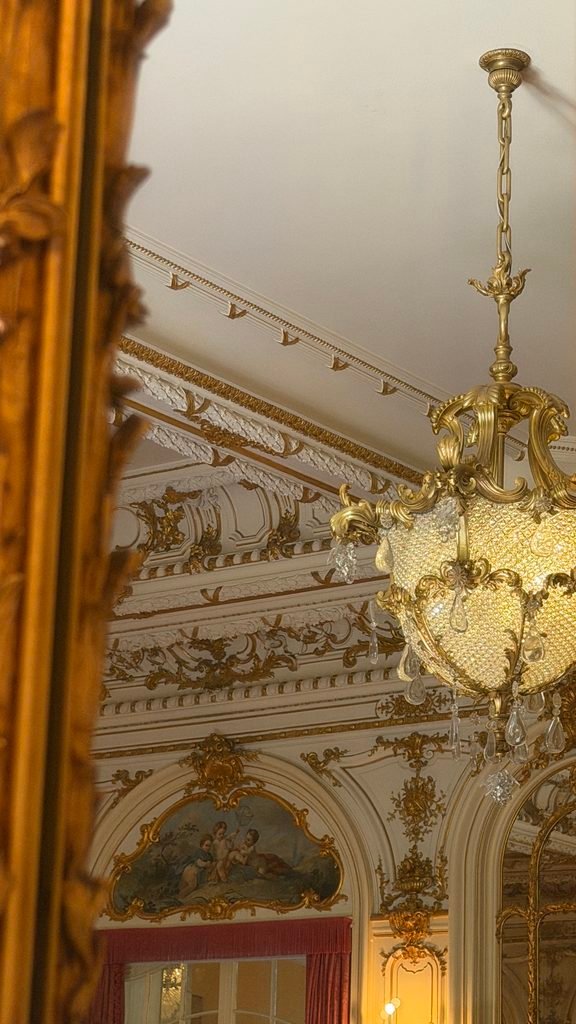
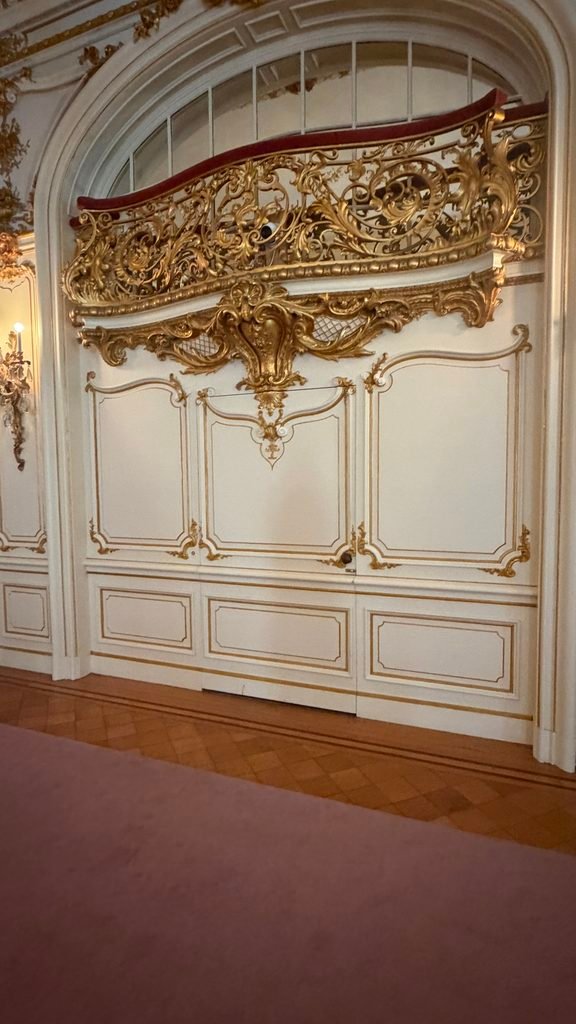
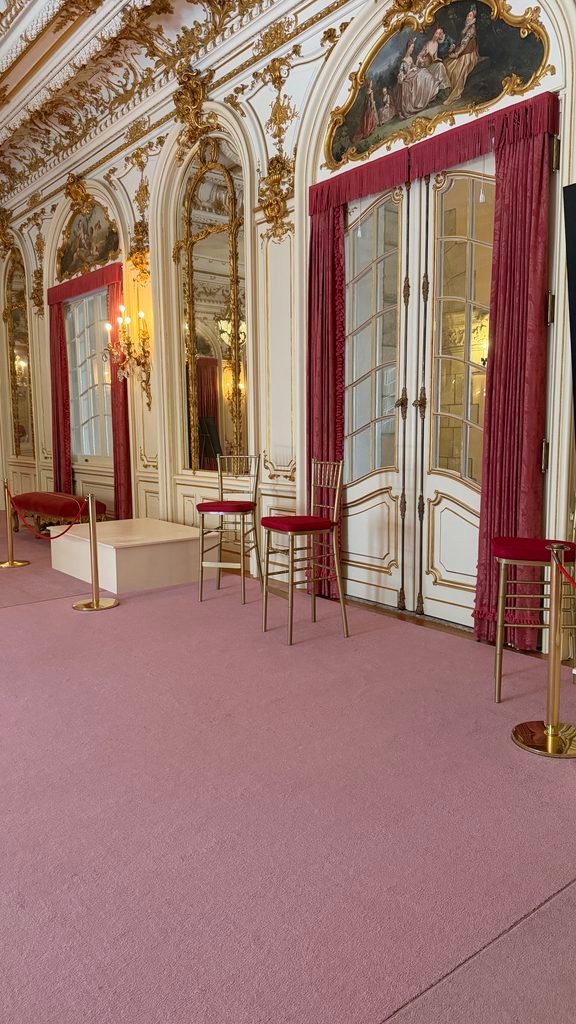
Nowadays, the room is used for much quieter speaking and lecture events, and to preserve the original flooring, they have covered it with a not-so-pretty carpet. Even so, the space is still impressive. Although actual parties are no longer hosted here, not that long ago many locals were able to celebrate their proms and weddings within these walls.
Upstairs: Which Room Would You Get?
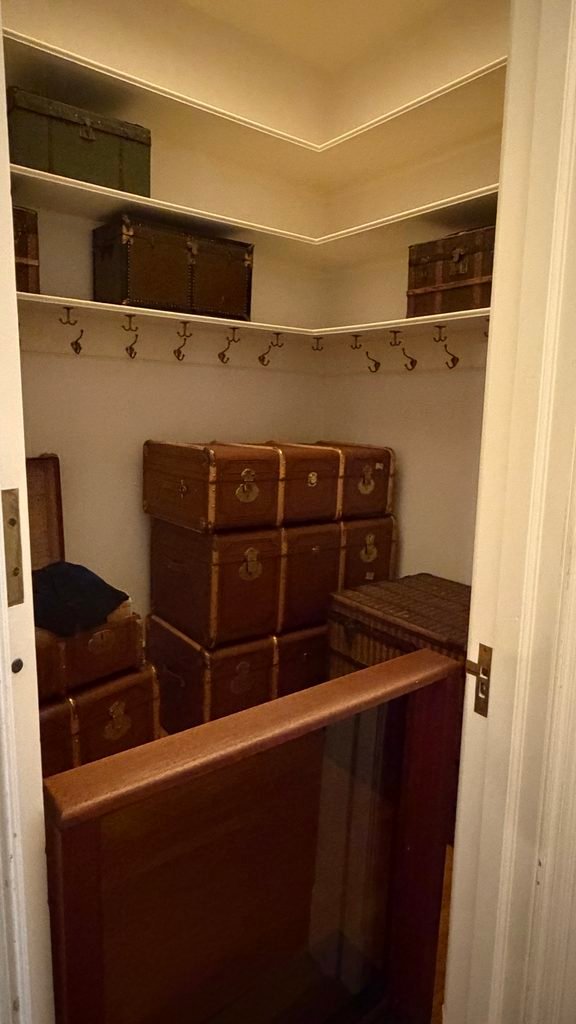
Whitehall’s bottom floor is where all the social functions happened, but upstairs is where the residents and guests spent their nights. The second floor holds the Master Suite, a long run of guest rooms, and, on the west side, the servants’ rooms (more servants’ quarters sit in the attic).
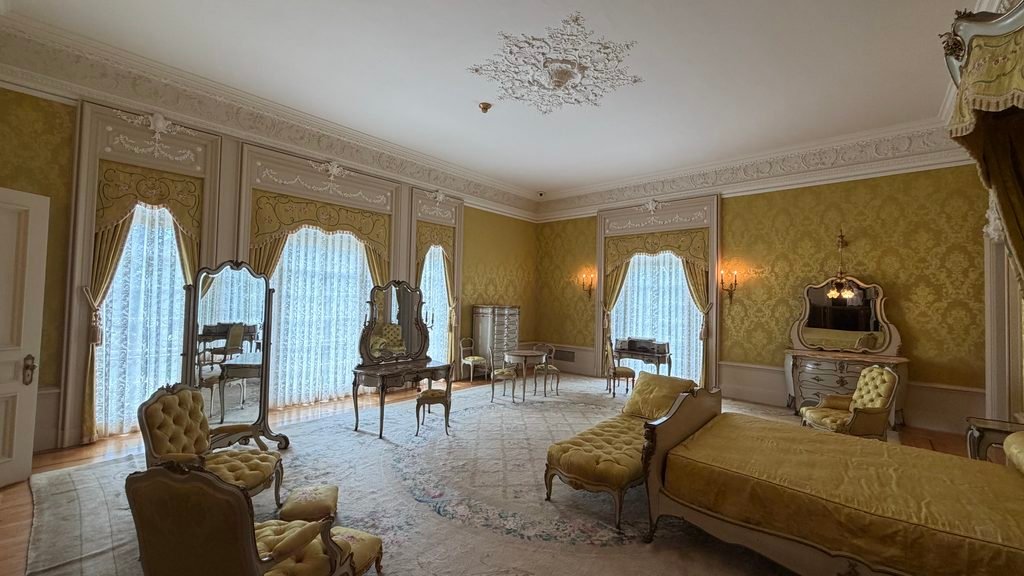
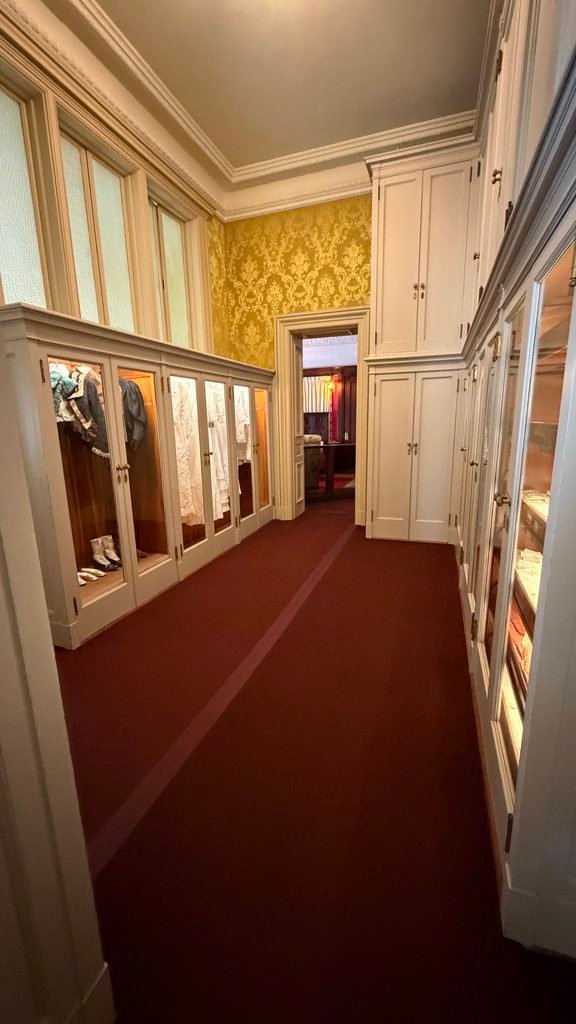

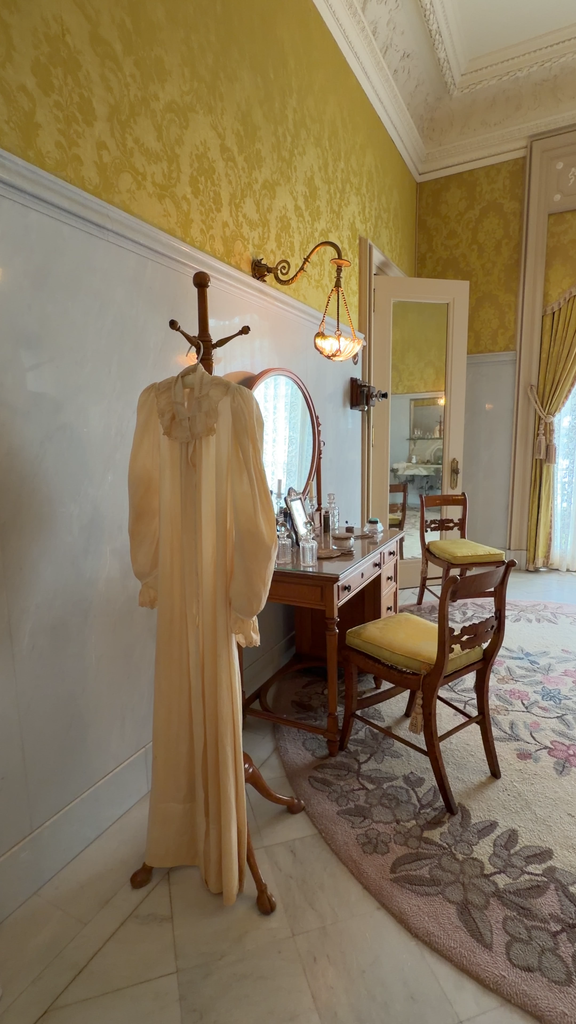
The Master Suite was, against Gilded Age customs, where both Henry and Mary Lily slept. Back then, wealthy couples normally slept in separate rooms, and I think those Gilded Age people were onto something about this one? I’m just saying! The Master Bedroom was decorated in yellow tones in a Louis XV Revival style. I loved the color scheme, the furniture was of great quality. I wish we could still find items like that outside of a museum.

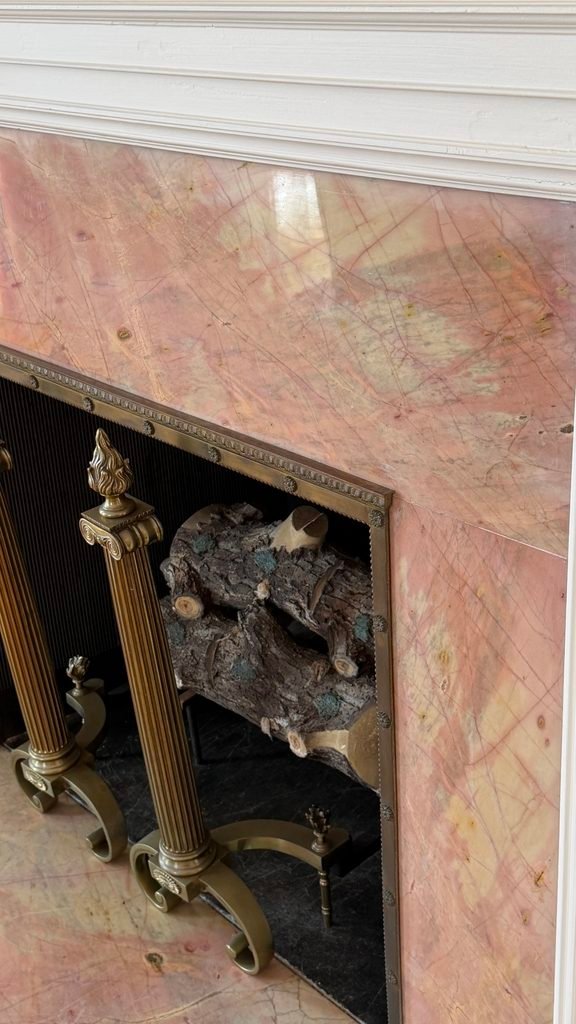
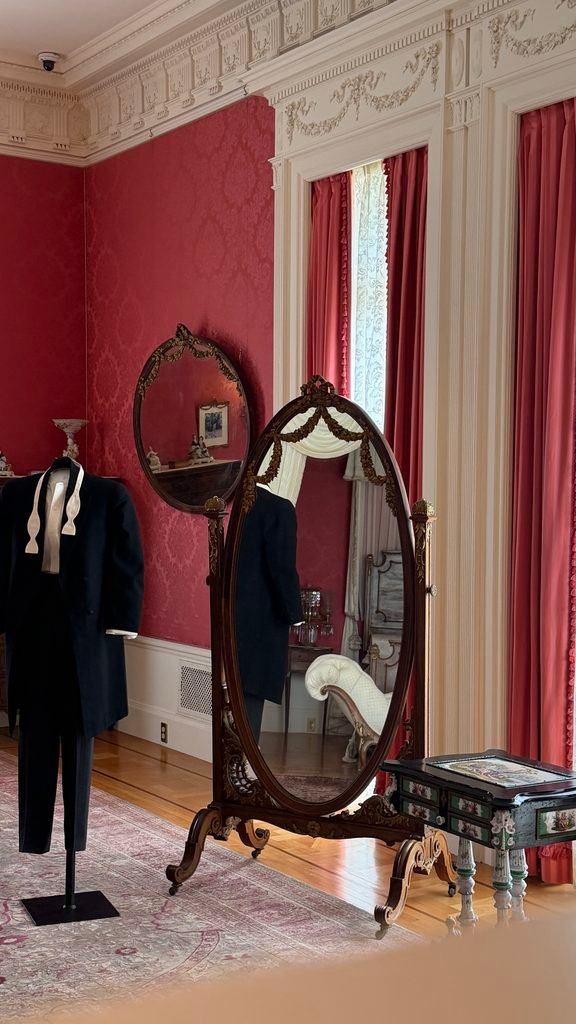
The guest rooms were named for their color or decorating scheme. The Colonial Chamber, the largest of them, is said to have been reserved for the most prominent guests. The others open to visitors include the Silver Maple Room, the Yellow Roses Room, the Louis XV Room, the Gold, Pink, Blue, and Green Rooms, and the Heliotrope Room.
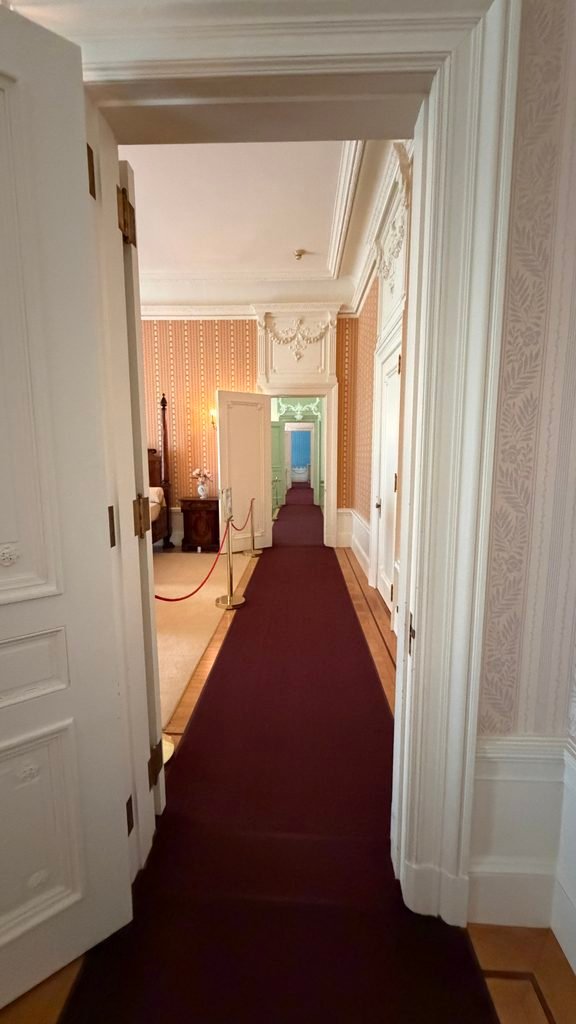
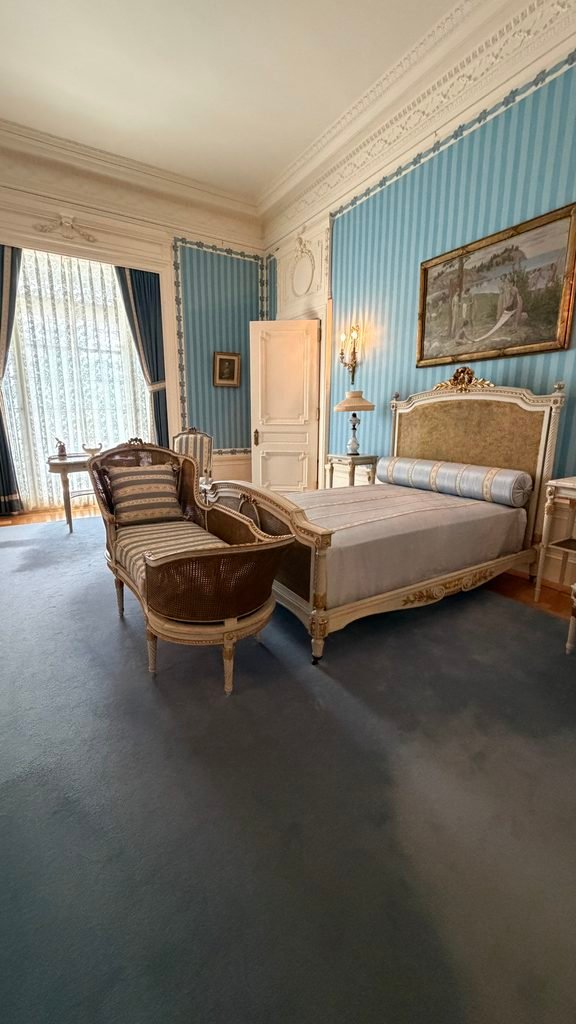
Tell me the truth: which room would be your favorite? My favorite color is blue, so my choice is fairly obvious.
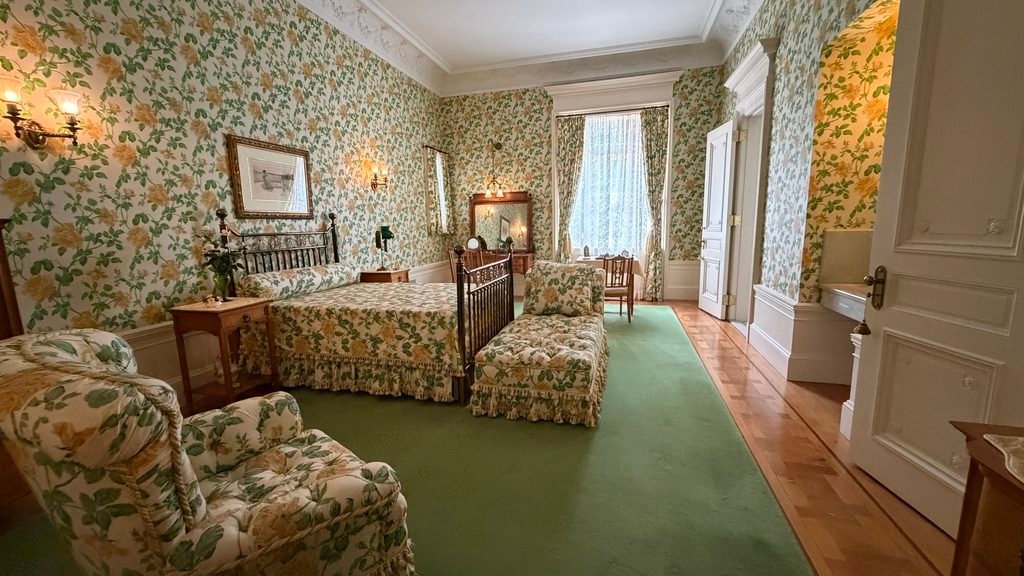
More of the museum, the Flagler family, the hotel, and the railroad history are showcased throughout the second floor. During the winter season, the museum exhibits rotating art throughout these rooms and in specific gallery spaces upstairs. (Note: Some of these rooms were unavailable when I visited due to ongoing restorations.)
Railcar No. 91 and the Flagler Kenan Pavilion
The property is located right on the Palm Beach Intracoastal, boasting an outstanding view of the water surrounded by palm trees. Adjacent to the main building sits another structure visitors are allowed to explore: the Flagler Kenan Pavilion.
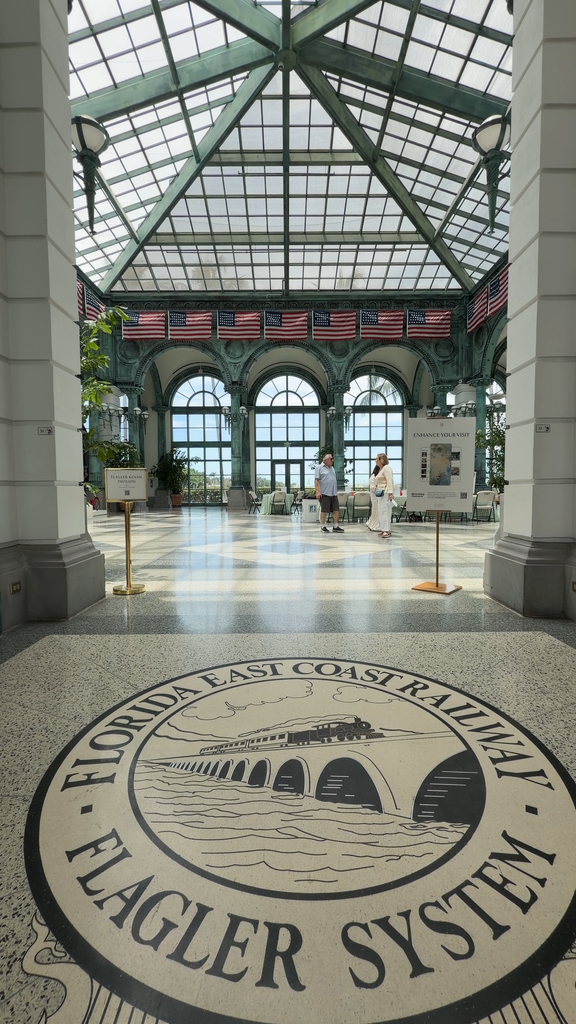
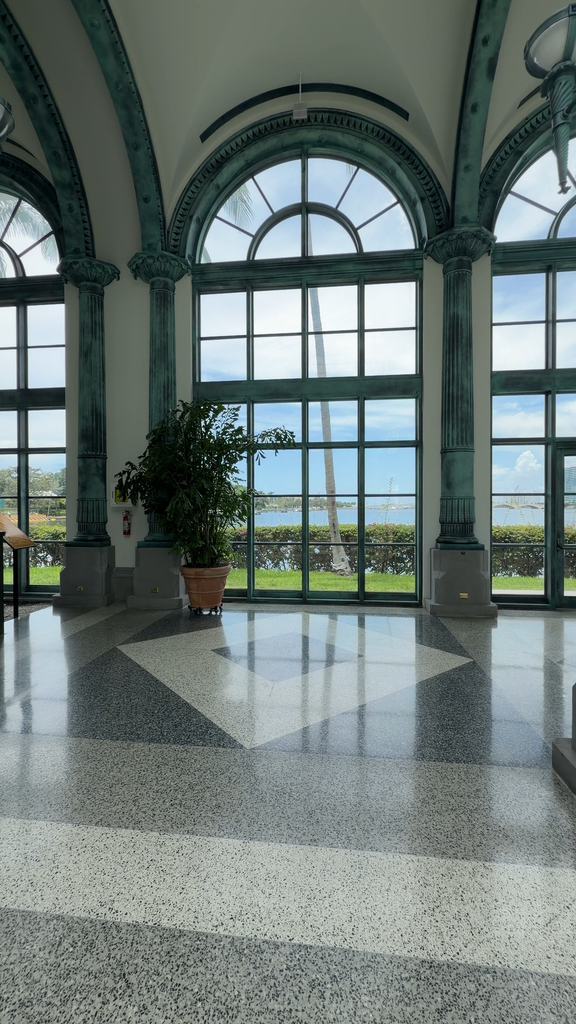
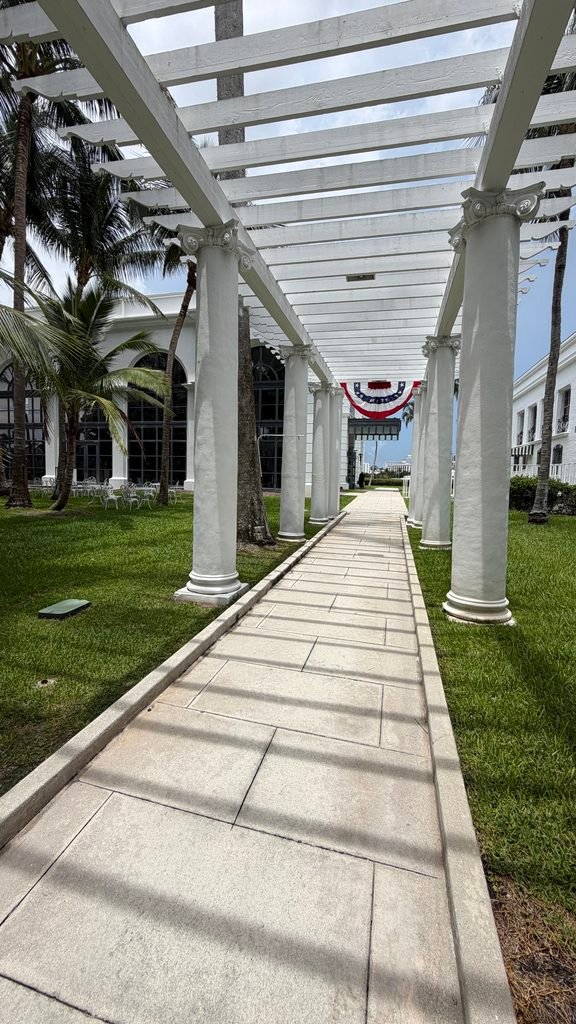
This stunning 8,100-square-foot glass-and-metal structure merges the elegance of the Gilded Age with Flagler’s railroad history, providing a panoramic view of Lake Worth and the Downtown West Palm Beach skyline.
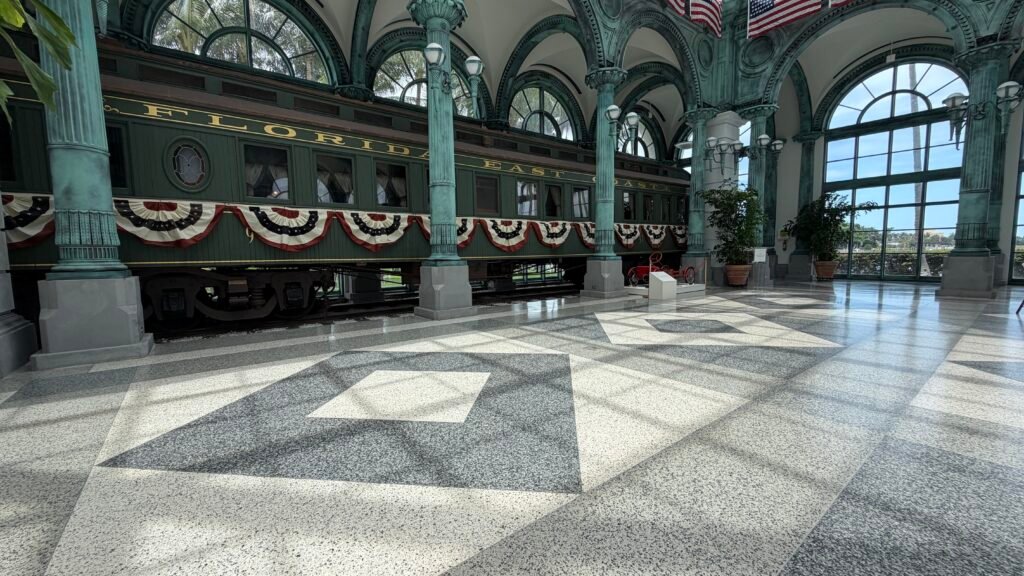
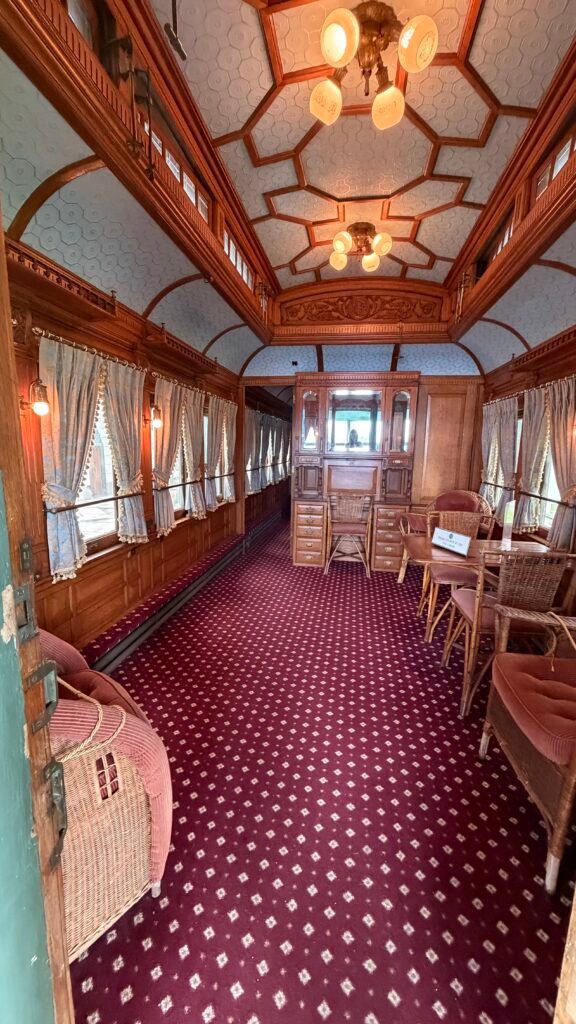
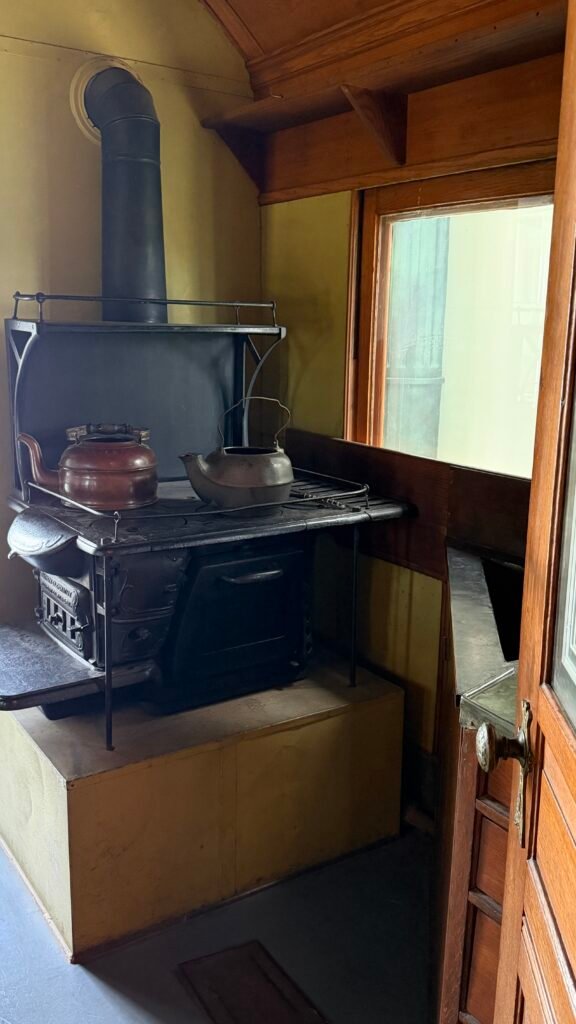

The pavilion first opened to the public in 2005, and inside sits Flagler’s Private Railcar No. 91. This luxury train car was built specifically for Henry Morrison Flagler and his companions to travel the Florida East Coast Railway. It was the very same car he rode all the way to Key West upon the completion of the Overseas Railroad in 1912!
High Tea in the Pavilion (Seasonal)
In the pavilion during the winter season, the museum offers the Gilded Age Tea Service (High Tea). The pavilion transforms into a beautiful cafe where visitors can experience high-society tea parties complete with finger sandwiches, small pastries, and, drumroll please, tea! The cost for High Tea includes your museum entrance ticket.
Since I visited at the peak of summer, I was not able to enjoy such a pleasure. However, other activities are offered during off-season months, including programs for children during school summer breaks.
The Lake Trail Next to the Flagler Museum
Once you’ve soaked in the indoor grandeur of the estate, steps outside the iron gates lead directly into Palm Beach’s natural history. Before or after you visit the museum, I highly recommend taking 30 to 45 minutes to walk the Lake Trail just south of the museum. It’s a scenic trail along the Intracoastal that offers incredible views of Downtown West Palm Beach. It’s a quick walk, and on your way back, you get a great angle of the Pavilion. Keep in mind the heat though. During peak summer the heat can be brutal and the walk will not be so enjoyable.
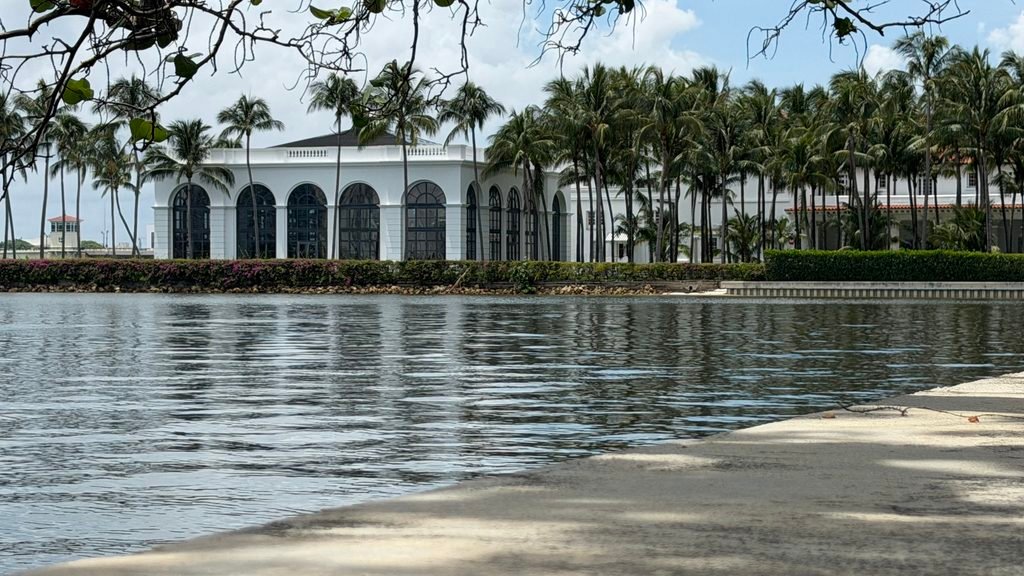
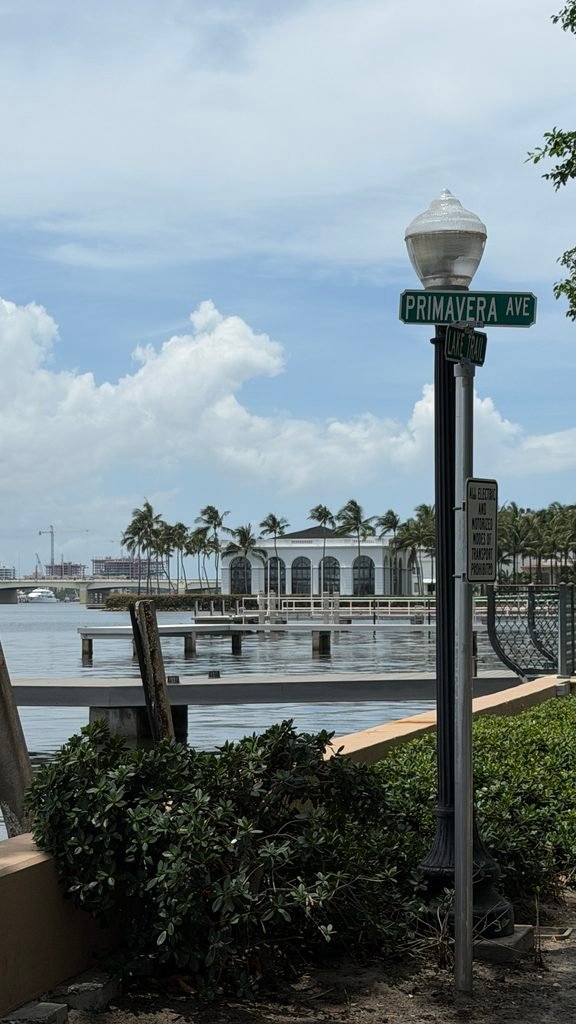
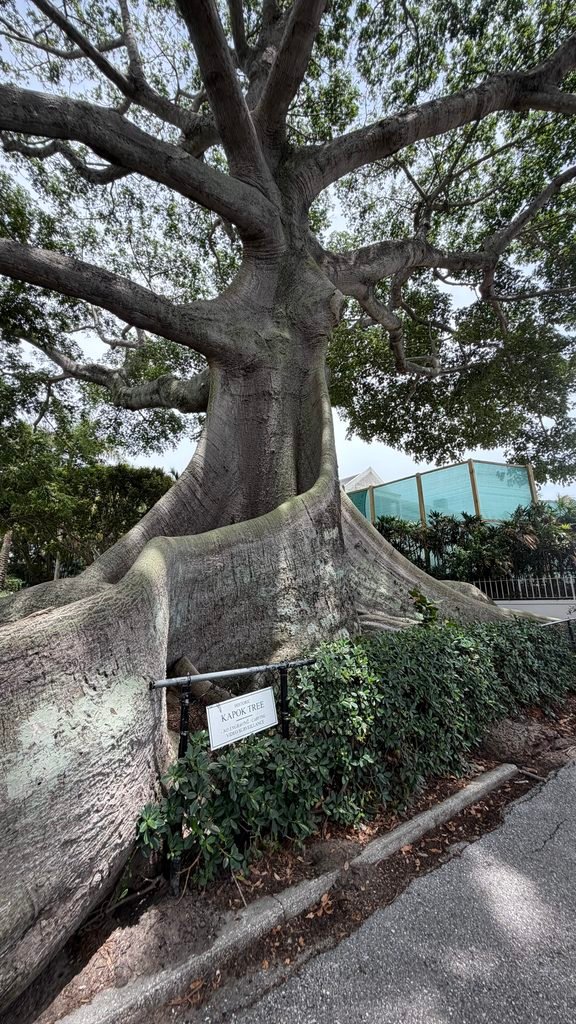

At the beginning of the walk, you’ll come across Palm Beach’s oldest house, the Sea Gull Cottage, and the impressive Kapok Tree. Both sit on Royal Poinciana Chapel grounds, but they hold fascinating history and offer super Instagrammable photo spots!
Sea Gull Cottage
Sea Gull Cottage was built in 1886 by a Denver railroad developer and bought by Henry Flagler in 1893, becoming his first winter home in Palm Beach. It served as his residence while he oversaw the construction of the Royal Poinciana Hotel nearby.
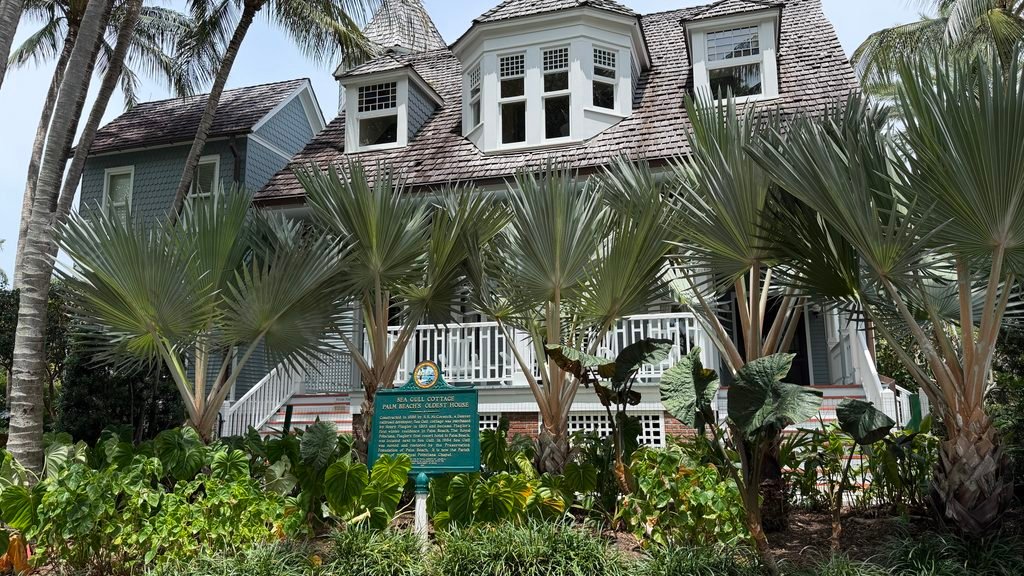
However, this cottage was moved in its entirety not once, but twice!
- 1913: It was moved from its original lakeside location to sit oceanfront next to The Breakers Hotel, serving as a rental for guests.
- 1984: The structure was in poor condition and facing demolition. The Preservation Foundation of Palm Beach stepped in and moved the whole cottage again back to Lake Worth, near Whitehall. This house travels more than I do!
The Kapok Tree
Sitting right next to the cottage within the Royal Poinciana Chapel grounds, you’ll find a giant Kapok tree, one of the most iconic natural landmarks in Palm Beach. I couldn’t pin down exactly when it was planted (accounts range from the 1880s to the 1890s) or confirm the story that the seed came from Cuba, but the Florida Forest Service lists it as the state’s champion kapok. As the story goes, it was the ultimate photo stop during the Gilded Age when guests stayed at the Royal Poinciana Hotel: elite visitors would dress up in full suits, top hats, and corset gowns just to have their picture taken by this massive tree.
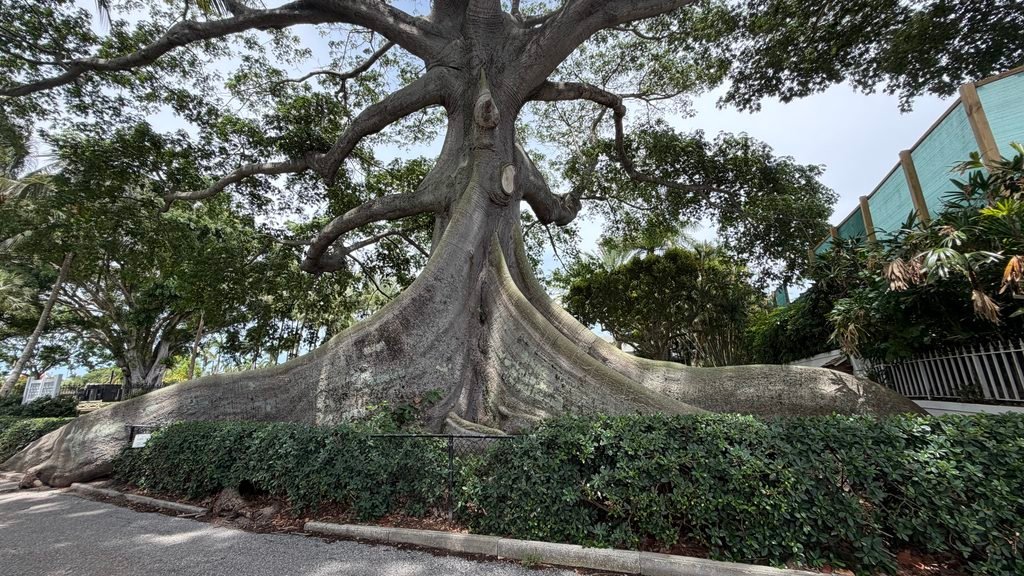
The Royal Poinciana Hotel, one of the largest wooden structures in the world when it opened in 1894, stood along this stretch until it was demolished in 1936. Today, the chapel is what remains.
Curiosities & Details : The History Behind the Flagler Museum
Salt, Debt, and That Rockefeller
Flagler risked entrepreneurship for the first time in the 1860s, getting involved in salt manufacturing during the Civil War, in Saginaw, Michigan. That brought results for a while, but it ended with the business collapsing after the war and a pile of debt: $50,000 he’d borrowed, a massive fortune at that time, on top of the $50,000 he’d invested himself.
Instead of letting this failure stop him, he went back to Ohio, where he was introduced to John D. Rockefeller. Yes, that Rockefeller. Together they founded Standard Oil, where they had immense success (obviously, since we all know of Rockefeller and his riches). A big part of that success was Flagler’s obsession with strategic efficiency and logistical vision, through well-thought-out contracts and railroad deals that starved competitors out of business.
The Railroad That Put Florida on the Map
This little history lesson is all fun and games, but how was he responsible for putting Florida on the map, and what does that have to do with this piece-of-art museum I mentioned? I was about to get to it, Anxious Annie.
The moment his feet hit Southern soil, the oil tycoon’s brain couldn’t stop seeing a massive logistical problem waiting to be solved. During his stay in St. Augustine in 1883, Henry Flagler fell in love with the region, but not so much with the available accommodations. As a natural response to this issue, he decided to build his own luxury hotel where he and his wealthy Northern friends could stay. That hotel was the famous Hotel Ponce de Leon, which opened in 1888 and now houses Flagler College.
He didn’t stop there. He set his sights on a palm-covered stretch of Lake Worth in Palm Beach and built the massive Royal Poinciana Hotel, which opened in 1894. He wanted to turn the area into America’s Riviera.
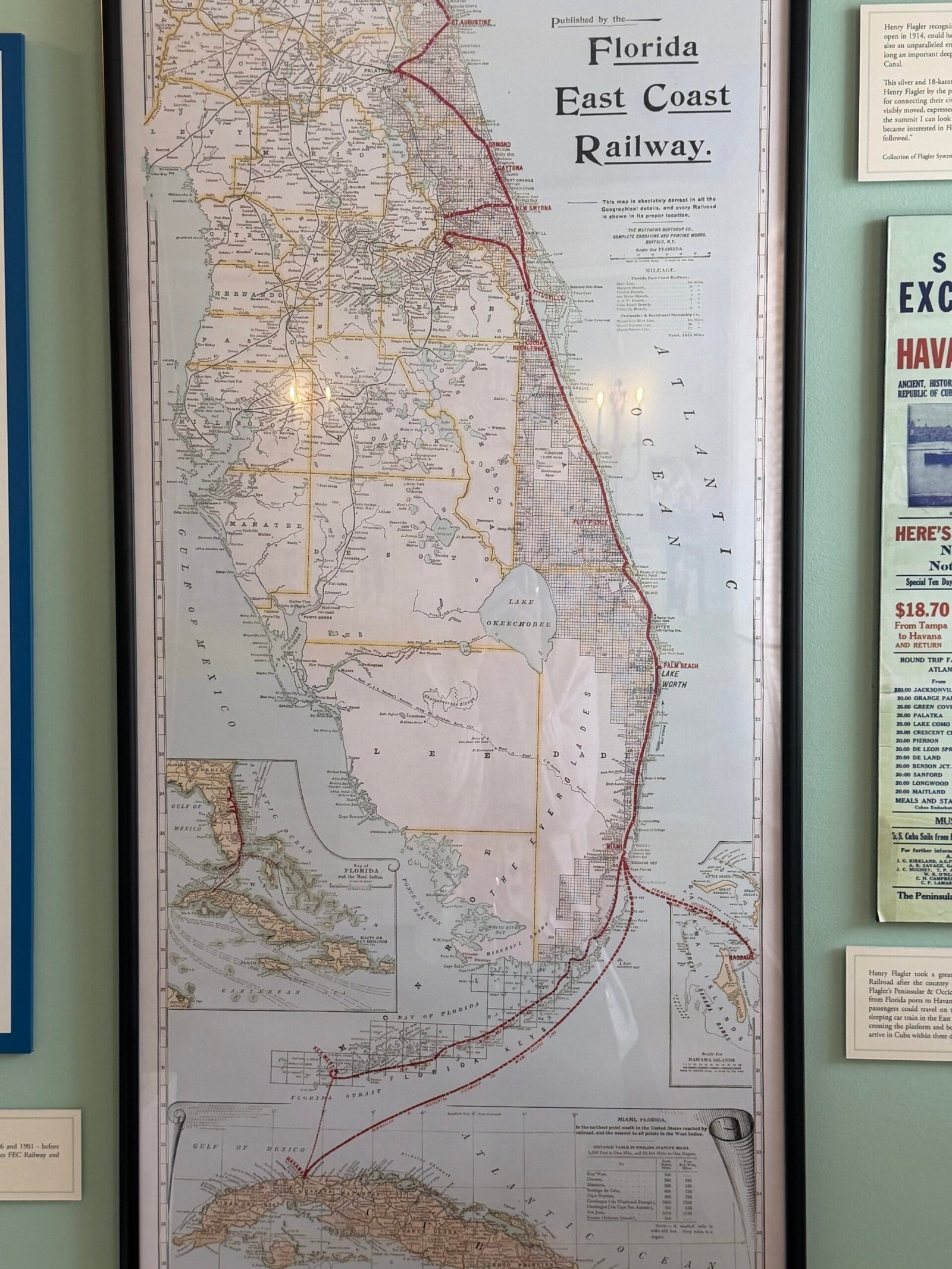
Transportation in the Florida wetlands was always an issue. Once again, he did the obvious by buying the broken-down short-line railroads in the area, standardizing and merging them into what became the Florida East Coast Railway (FEC):
- 1885: He bought the railroad section from Jacksonville to St. Augustine.
- 1890: A bridge over the St. Johns River opened, which allowed trains coming from north of Florida to go straight into the state instead of needing a ferry transfer.
- 1894: The tracks reached West Palm Beach, and Miami followed in 1896.
- 1912: The line reached Key West, the southernmost point in the country.
That Key West section of the railroad is no longer functioning, but you can still see remnants of it when driving down to the Keys. And there you have it: Flagler’s vision for the state came to life, making these wetlands accessible and allowing more and more people to establish themselves in this “new land.”
The Close Call with Demolition
Here is the thing: after both Henry and his wife passed away by 1917, Louise Clisby Wise Lewis, Mary Lily’s niece, inherited the estate. Per the guided tour, she was young and had little interest in living in such a big palace, so she sold the property in 1925 to a group of commercial investors who turned it into the Whitehall Hotel.
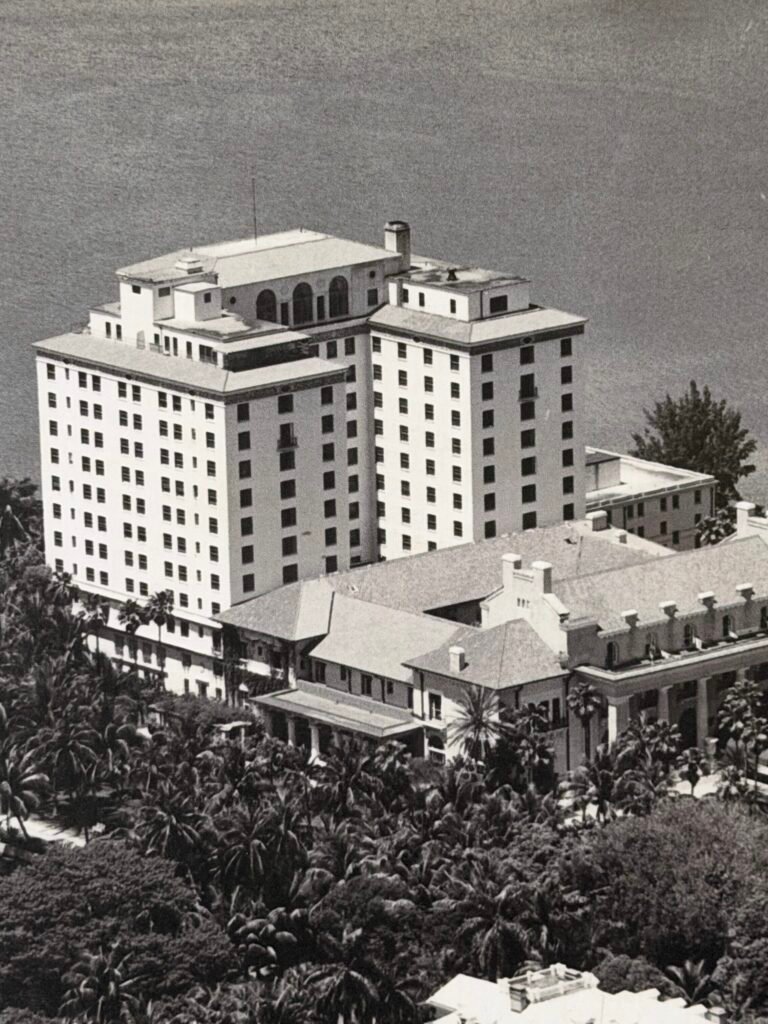

They built a 300-room tower onto the back of the property, and for over three decades the establishment used the historic mansion as the grand lobby and common area of the hotel. However, by 1959, the hotel was struggling financially, and per the guided tour, developers were working on a plan to level the Whitehall estate to build a modern high-rise complex. Jean Flagler Matthews, Henry’s granddaughter, heard of this blasphemy, formed a nonprofit, and purchased the property back. Phew, that was close!
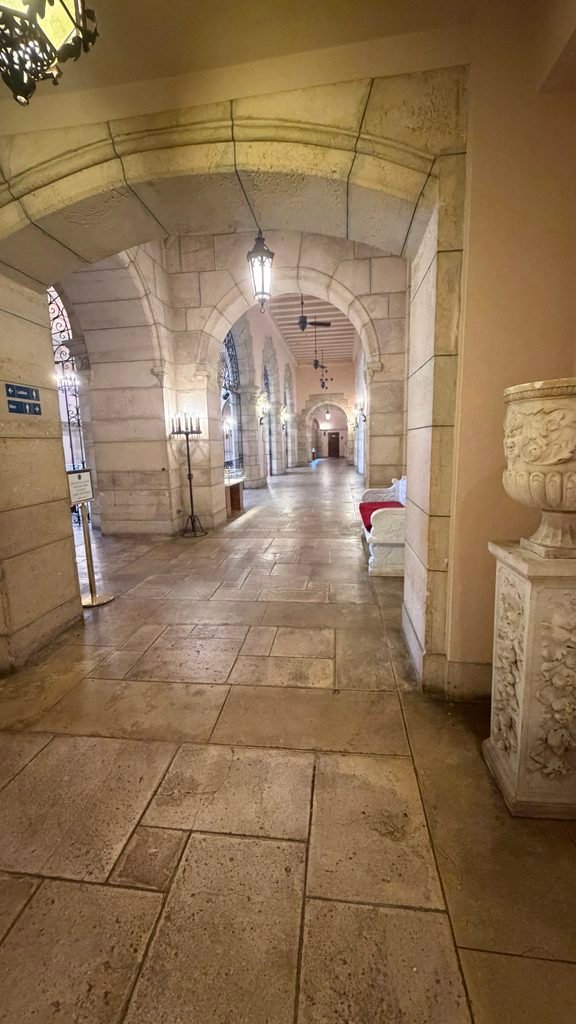
The hotel tower came down in 1963, leaving intact only its bottom floor (where you can visibly see the drastic difference in construction styles between it and the original mansion). The hotel portion looks a lot like a cheap imitation of a historic European castle, in my opinion, very similar to what you would find at a Disney property, very touristy.

Due to Jean’s huge contribution in salvaging the property and all the history it contains, they display a big painting of her wearing the golden gown she wore at the museum’s inauguration event. You can find her portrait on the wall opposite Flagler’s within the Grand Hall.
(When I visited the museum, the gift shop area was being restored, so they had moved it to what used to be the hotel lobby. In this area, the museum displays some of the original china, glassware, and cookware they used in Whitehall.)
The House That Cooled Itself
Maintaining the museum’s condition and all its original memorabilia takes a lot of work and constant restoration. From 2000 to 2005, per the guided tour, the museum went through a major centennial renovation project, a multi-phase plan to upgrade the structure and expand its offerings. Due to heat and humidity damage (to be expected in South Florida!), specialists renovated the whole museum top to bottom, working room by room on the floors, paintings, and furniture. More recently, the museum finished a full restoration of the Dining Room in September 2024.
I mentioned before how they planned the ballroom with many windows to allow wind circulation to cool the house down, but the ballroom wasn’t the only room built with that in mind! The whole mansion featured central heating combined with passive architectural ventilation to preserve the interior and protect all the incredible woodwork and silk wall coverings.
The central heating system worked as a dehumidifier for moisture control and was kept running even during the hotter months. Since modern AC wasn’t a thing yet, the architects designed passive airflow pathways around a massive central courtyard. By opening windows throughout the mansion, the breeze could move air from the courtyard through the rooms and push the damp air out.
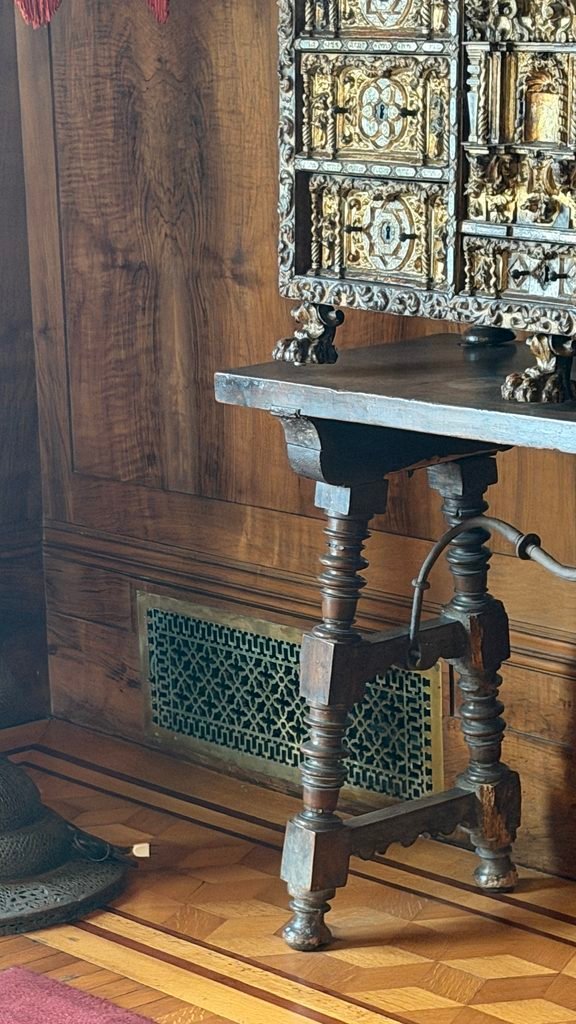


This well-thought-out infrastructure allowed the estate to survive for nearly a century before central AC was finally installed in the late 1990s. When you visit, you can still spot the original vents and thermometers across the building.
Is the Flagler Museum Worth It?
100% yes. Whether you are a Florida local looking to understand how this state was built or a visitor wanting a break from the beach, the Flagler Museum is a rare glimpse into pure American ambition and Gilded Age glamour. Between the jaw-dropping architecture, the railcar history, and the scenic Lake Trail walk, it’s easily one of the most unique cultural stops in South Florida.
What worked for me
- The Grand Hall, the ballroom, and the amount of thought in every detail
- Doing a mix of the guided and self-guided tours
- Railcar No. 91, which Flagler rode to Key West
- The Lake Trail add-on, which costs nothing and takes 30 to 45 minutes
What didn’t
- The Library is thin on books if you’re a book lover
- The original ballroom floor is covered by a not-so-pretty carpet
- Some upstairs rooms were closed for restoration when I visited
- High Tea is seasonal, and I missed it by visiting in summer
Who it’s for: Florida locals who want to understand how this state was built, and visitors who want a break from the beach. Give it a full morning or afternoon.
Essential Things to Know Before Visiting the Flagler Museum
Choosing a tour. Once you enter the museum building you will notice the guest services desk to your left, with the museum’s staff ready to welcome you and let you know the best way to experience this beauty:
- Self-Guided Tour: If you prefer to go at your own pace, you can use their self-guided audio tour. You receive a wand-like device where you can type in the specific room or detail number to hear information about it. You will find these numbers throughout the attraction downstairs and upstairs. Narration comes in five languages, Portuguese included.
- Guided Tour: Or you may wait for one of the times they run their guided tour, where a staff member will share more of the history behind the mastermind who built the railroads in Florida, his life, and Whitehall’s details.
My suggestion is to do a mix of both. The guided tour only covers the bottom floor of the museum, so take advantage of a more in-depth, knowledge-forward guide there, followed (or preceded) by your own walk-through of these rooms using the self-guided tool, and only then move to the second floor. You can complete your visit in a couple of hours, but since I did as I suggested, it took me a little over 3 hours to fully experience the attraction.
Season and closures. The Tea Service runs from the day after Thanksgiving through Easter Sunday, and the museum recommends booking ahead. Some upstairs rooms may be closed for restoration, so check before you go if a specific room is the reason you’re visiting.
Accessibility. I didn’t look into this during my visit, so what follows comes from the museum’s own accessibility page and one wheelchair user’s account. Call ahead for anything specific.
- Accessible parking is near the entrance, and the accessible entrance is on the south side of the property.
- Whitehall has elevation changes built into its architecture, so permanent ramps and an elevator have been installed to make the whole property accessible, second floor included.
- Wheelchair-accessible restrooms are on the first floor of Whitehall and in the Flagler Kenan Pavilion.
- Guided tours use a group guide system for amplification, and the audio tours and a Bluetooth smartphone app are included with admission. Written brochures come in multiple languages.
- Railcar No. 91 is reached by steps. A wheelchair user’s account on The Palm Beaches’ site says a video screen lets visitors who can’t climb them see the interior, so confirm on arrival.
- I couldn’t find anything on sensory accommodations (quiet hours, for example). Ask staff if that matters to you.
Food. On site, the Tea Service in the Pavilion is the sit-down option, and the museum also offers a casual “Picnic in the Cocoanut Grove.”